Swamp Cooler Repair
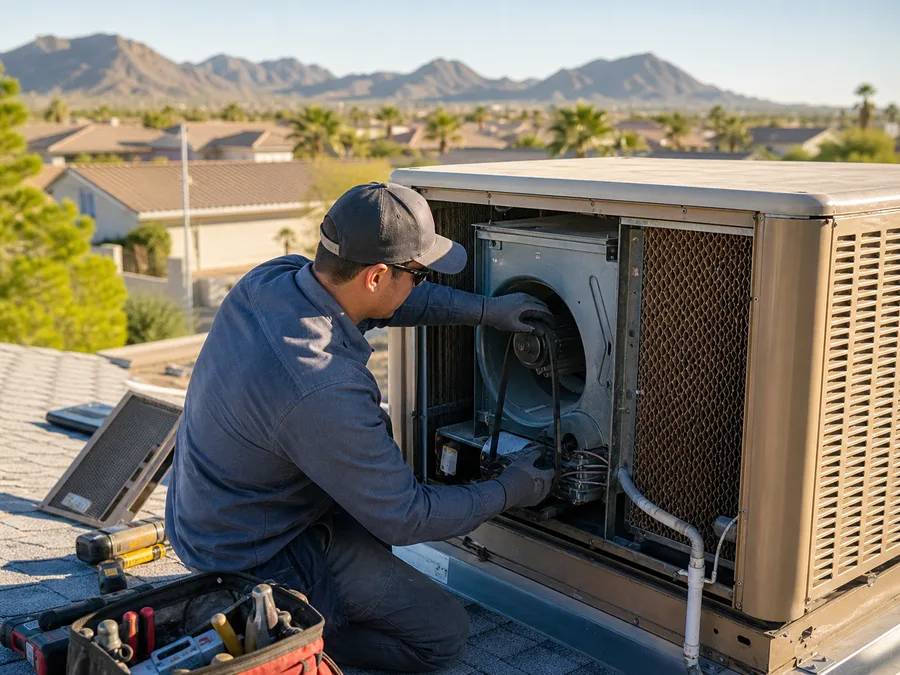
Get help when your cooler blows warm air, leaks, makes noise, or will not turn on.
Get help with warm air, leaks, weak airflow, dry pads, installation, or seasonal service in Sandy and nearby Salt Lake County areas.
 Repair & install
 Salt Lake County
 Free estimate

Warm air, weak airflow, leaks, and mineral buildup are common signs that your swamp cooler needs attention. Handle the symptom at your Sandy home before a small cooler issue turns into a hotter house.
Get help when your cooler blows warm air, leaks, makes noise, or will not turn on.
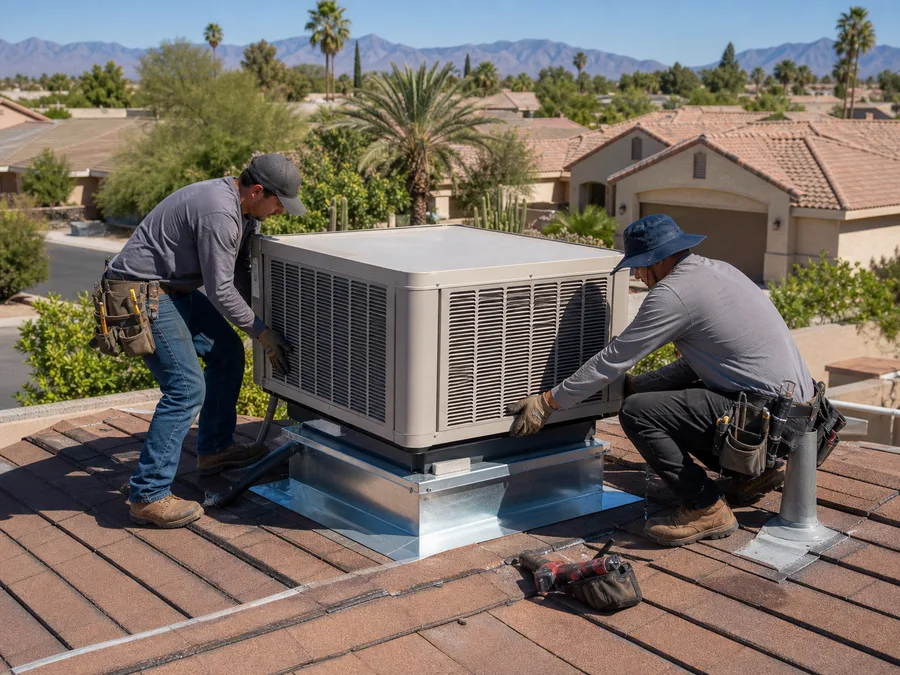
Replace an old unit or install a new evaporative cooler sized for your home and climate.
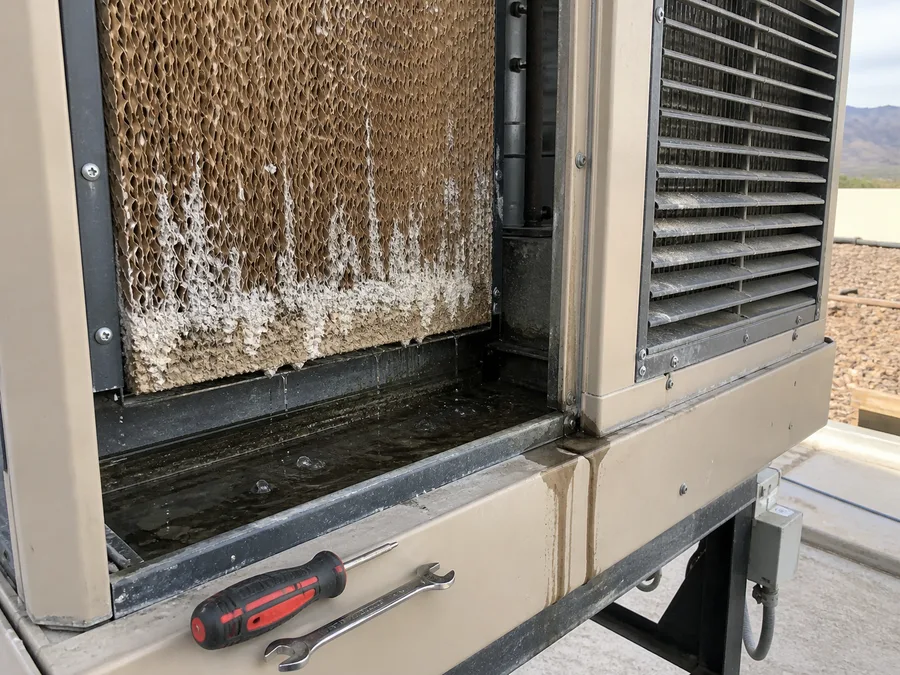
Clean, inspect, and tune up your cooler before heat, scale, or worn parts cause a breakdown.
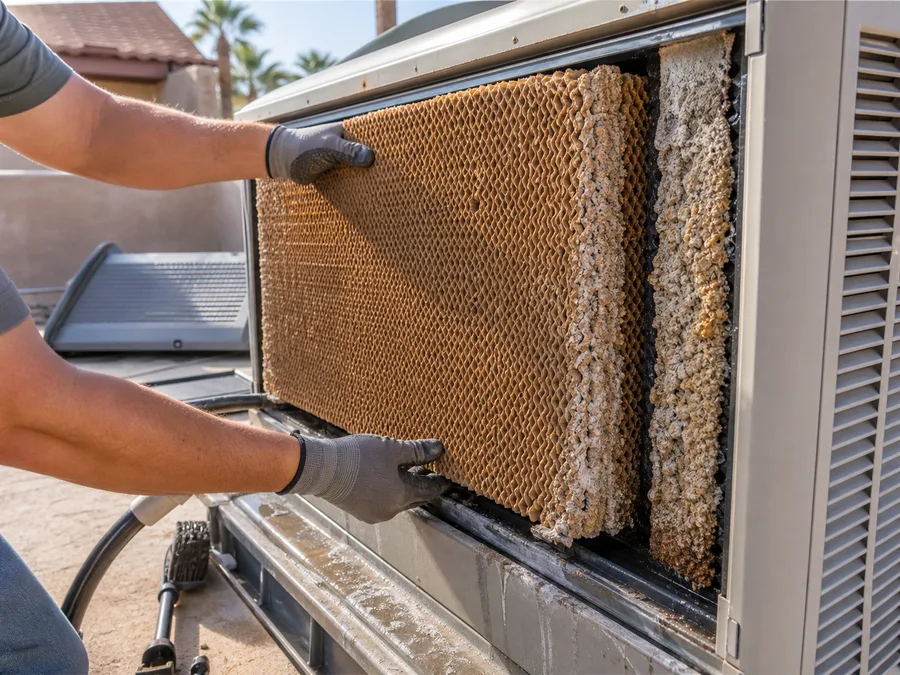
Replace worn or mineral-clogged pads so your cooler can move more air and cool better.
Pick the symptom closest to what you see at your Sandy home.
Usually dry or worn pads, or a pump that is not moving enough water.
Warm air fixes Often clogged pads, a loose belt, a slowing motor, or a damper left closed.
Not cooling fixes
Usually the float valve, overflow, drain fitting, or supply line.
Find the leak
Check the pump, the float valve, and the distributor lines.
Test the pump Even moderately hard water leaves minerals behind as it evaporates, so white crust on pads, scale in the reservoir, or clogged distributor lines can show up in Sandy during heavy summer use.
Hard water and pads Small part failures usually point to repair. Rust, repeat leaks, or an undersized unit point to replacement.
Repair cost guideThe median last spring freeze in Sandy is around April 29. Turn the water back on and start the cooler after that, once warm days are steady.
Summer highs near 92°F are when pads, pumps, and belts get tested. Plan a pad and water-flow check before the hottest weeks.
The median first fall freeze in Sandy is around October 22, with about 112 freezing nights a year. Drain the water line and pan and cover the cooler before then.
The Sandy water supply includes treated mountain water bought wholesale from the Metropolitan Water District of Salt Lake & Sandy. Salt Lake City's 2025 water quality report lists Metro's Little Cottonwood and Point of the Mountain treatment plants at about 8.4 and 9.4 gpg, but the hardness at a Sandy tap can differ, so check Sandy's annual water quality report for your area.
Historic Sandy, Downtown Sandy, Sandy Corners, South Towne, Alta Canyon, Dimple Dell, and other parts of Salt Lake County.
Sandy sits around 4,450 feet on the southeast side of the Salt Lake Valley, between the Jordan River and the mouths of the Wasatch canyons. NOAA 1991-2020 normals for the two nearest stations, Draper-Point of the Mountain and the Cottonwood Weir station near Big Cottonwood Canyon, put the July average high at about 91 to 94°F, with the median first fall freeze around October 22 and the last spring freeze from mid to late April. Startup usually waits for steady warm weather in late May or June, and shutdown, draining, and covering should happen before late-October nights. Wildfire smoke, dust, or monsoon moisture can also make a cooler feel weaker on some summer afternoons.
Sandy City Community Development lists building permits and building inspections in its Build section. Utah's statewide State Construction Code currently incorporates the 2024 International Mechanical Code and the 2021 International Residential Code with state amendments. For a new cooler, full replacement, roof work, electrical or water-line changes, or a changed equipment location, ask whether the estimate includes the correct Sandy permit and inspection step.
Share the exact service address when you call or request an estimate.
Sandy in relation to nearby communities and county lines.
Planning ranges, not a local price list. Roof access, parts, and scale move the final estimate.
| Job | Typical range |
|---|---|
| Common repair total | $90 - $450 |
| Seasonal tune-up | $80 - $200 |
| Pad replacement | $60 - $225 |
More Utah service areas
Choose what the cooler at your Sandy home needs. If you are not sure, start with the symptom guide that matches what you see or hear.
See common causes, safe checks, and when the problem needs repair.
Quick answers for homeowners in Sandy.
Hot afternoons in Sandy average around 92°F with about 26% humidity. Lower humidity allows more evaporation, so a cooler can work well when the pads stay wet, the pump moves enough water, and airflow remains strong.
Many common repairs fall between about $90 and $450. Access, parts, mineral scale, and urgency set the actual estimate for homes in Sandy.
Because the hardness at a Sandy tap can vary with the supply blend, visually inspect pads before startup and about every 6 to 8 weeks during the cooling season. Check sooner if airflow drops, pad sections dry out, or white crust starts to form, and follow the cooler and pad manufacturer for the maintenance schedule.
Sandy has dry-air cooling conditions, dust, and seasonal use that can leave pads and reservoirs dirty even when water-hardness data is limited. Cleaning and pad condition matter most before heavy heat.