Typical repair: $90 - $450. Full replacement: $1,500 - $3,500.
- CheapestBelt, float valve, or pad swap.
- Mid-rangePump or water-flow repair.
- PriciestMotor, heavy scale, or full replacement.
A broad planning range for many repairs is $90 to $450. A same-location replacement often starts around $1,500 to $3,500, while complex roof or duct work can cost more.
Typical repair: $90 - $450. Full replacement: $1,500 - $3,500.
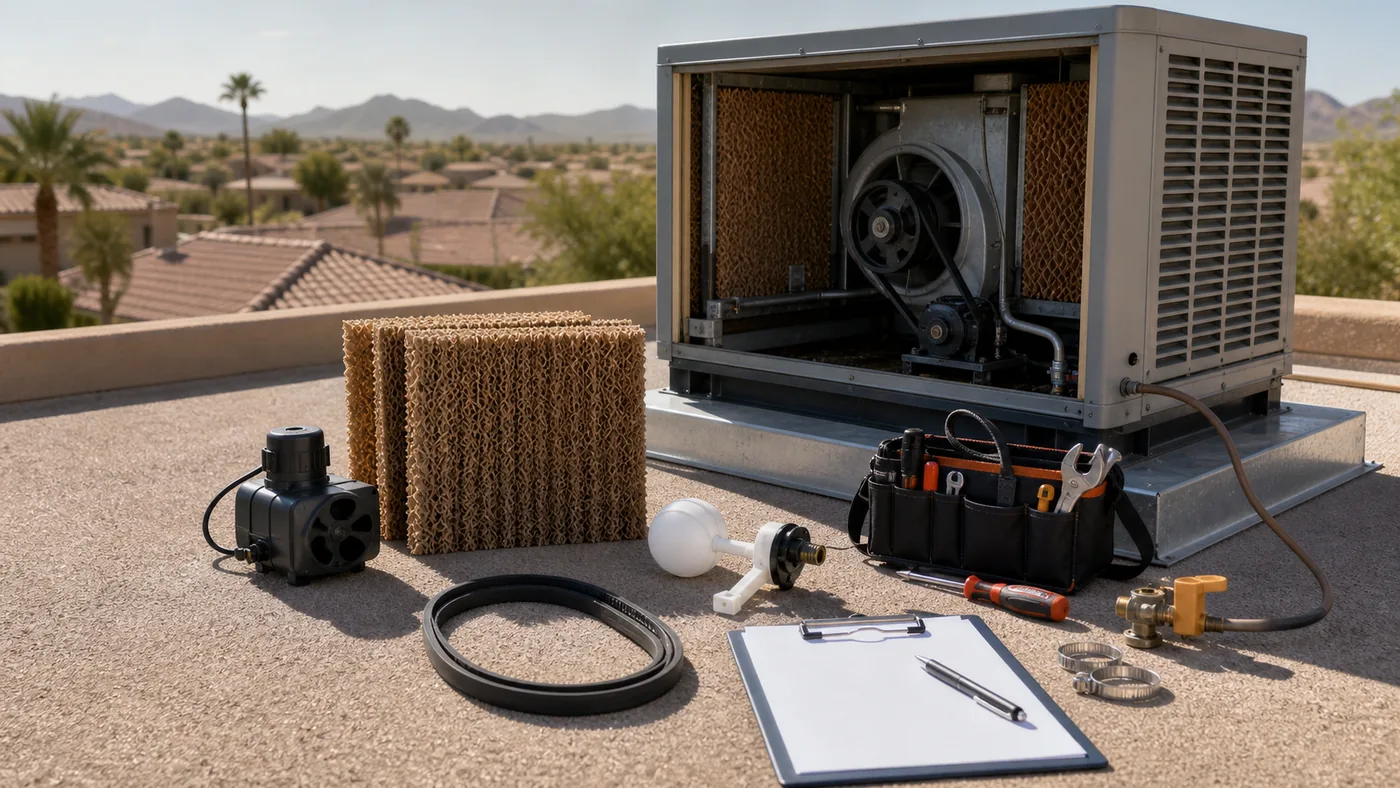
A swamp cooler uses a fan, pump, water lines, float valve, and evaporative pads. The final price depends on which part failed, how much mineral scale has built up, and whether the unit is easy or difficult to reach. Motors, rigid-media pads, electrical work, or several problems at once can push the estimate above the usual range.
These are planning ranges, not quotes. Use them to compare an estimate, not to lock in a final number before the unit is reviewed.
The notes matter as much as the numbers. The same repair can sit at either end of its range depending on parts and access.
| Job | Typical range | What drives it |
|---|---|---|
| Service / diagnostic call | $60 - $120 | Ask whether the diagnostic fee is applied to an approved repair. |
| Seasonal tune-up | $80 - $200 | Clean, inspect, adjust water flow, check pads and belt. |
| Pad replacement | $60 - $225 | Depends on pad type (aspen vs rigid media) and unit size. |
| Water pump replacement | $90 - $250 | Part plus labor; dry pads often trace back to the pump. |
| Belt or motor service | $90 - $350 | A belt is usually a lower-cost item; a motor is the bigger end of the range. |
| Float valve / water line | $75 - $200 | Fixes overflow, leaks, or pads that never get wet. |
| Common repair total | $90 - $450 | Common planning range once parts and labor are combined. |
| Full unit replacement | $1,500 - $3,500 | New cooler plus install; varies by size, type, and roof access. |
If a quote is higher than the ranges above, ask which access, part, cleaning, or timing issue is driving the price.

A roof-mounted cooler takes more time and ladder or safety setup than a ground or window unit, which adds labor.
Hard-water buildup on pads, lines, and the reservoir can turn a quick fix into a longer clean-and-repair visit.
A belt or float valve is usually a lower-cost item than a motor, pump, or full rigid-media pad set.
A rusted, undersized, or repeatedly failing cooler is worth comparing with replacement before approving another large repair.
Availability is usually tighter during a heat wave than before peak season, especially when the house already has no cooling.
Labor rates, water hardness, and local scheduling can shift the typical range from city to city.
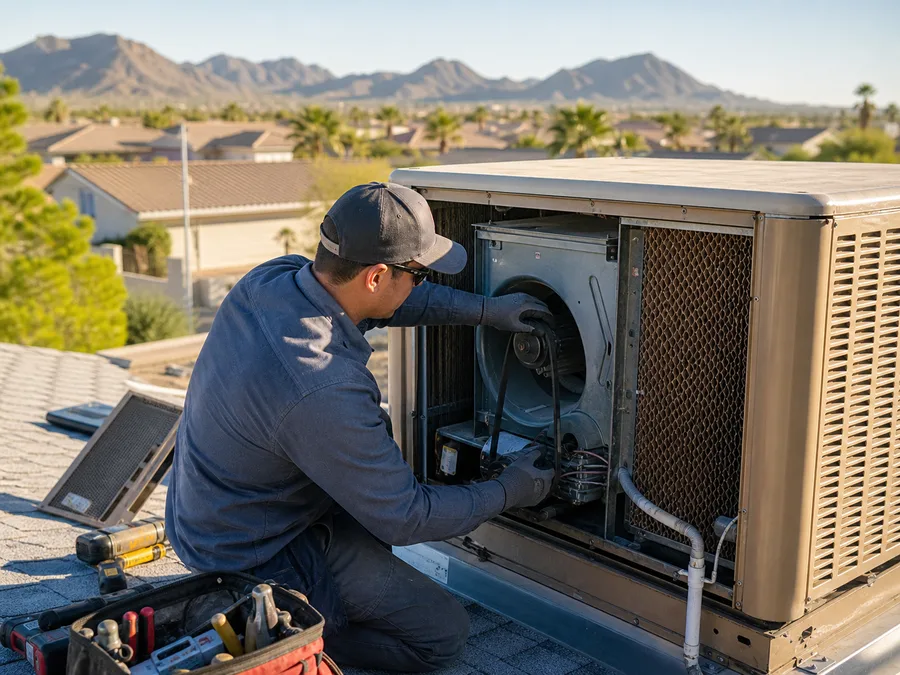
Repair often makes sense when the cabinet is sound and the problem is limited to pads, a pump, belt, float valve, or cleaning. Compare replacement when rust, poor sizing, repeat leaks, or several failed parts make another repair hard to justify.
A single repair approaches about half the cost of a new installed unit.
The cabinet is rusted through, leaking, or the unit is clearly undersized for the home.
You have paid for the same fix two or three times in a couple of seasons.
Parts for an older model are hard to source, or the motor and pump both fail together.
Small leaks, worn pads, scale, and weak water flow can become urgent when the hottest weather arrives. Earlier inspection gives you more time to compare the work and the estimate.
Roof access, water hardness, cooling-season length, labor, and peak-heat demand can change the work behind an estimate. The figures above remain planning ranges, not city price lists.
At 14 gpg over about 220 cooling days, visible scale, pad condition, and unit access are useful details to include in the estimate request.
Swamp cooler help in PhoenixAt 16 gpg over about 200 cooling days, visible scale, pad condition, and unit access are useful details to include in the estimate request.
Swamp cooler help in Las VegasAt 7 gpg over about 140 cooling days, visible scale, pad condition, and unit access are useful details to include in the estimate request.
Swamp cooler help in AlbuquerqueAt 5 gpg over about 105 cooling days, visible scale, pad condition, and unit access are useful details to include in the estimate request.
Swamp cooler help in DenverAt 12 gpg over about 112 cooling days, visible scale, pad condition, and unit access are useful details to include in the estimate request.
Swamp cooler help in Salt Lake CityAn estimate is only as good as the details behind it. Share these when you call or request a quote.
 Your ZIP code and whether the cooler is roof-mounted or ground-level
 The symptom: warm air, leak, weak airflow, dry pads, or noise
 When pads were last changed or the unit was last serviced
 Any visible white mineral scale on pads, lines, or the reservoir
A broad planning range for many swamp cooler repairs is about $90 to $450 once the service call, parts, and labor are combined. Simple fixes like a belt or float valve are cheaper, while a motor, pump, or full pad set can push higher.
Pad replacement commonly runs about $60 to $225 depending on whether the unit uses aspen pads or rigid media, the size of the cooler, and whether scale cleaning is needed at the same time.
Compare replacement when a single repair approaches roughly half the price of a new installed unit, or when the cooler is rusted, undersized, and failing often. Unit condition, expected remaining life, and the work included in each quote matter more than one rule by itself.
A new evaporative cooler with installation typically ranges from about $1,500 to $3,500, depending on the cooler size and type, ductwork, and whether it is roof-mounted or ground-level.
Difficult roof access, heavy mineral scale, multiple failed parts, emergency timing during a heat wave, or a unit that needs several repairs at once can all push a quote above the typical range. Ask for parts and labor to be separated clearly.
Booking a pre-season tune-up, replacing pads on schedule, keeping the reservoir clean, and describing the symptom clearly when you call all help avoid larger emergency repairs later in the season.
Get help when your cooler blows warm air, leaks, makes noise, or will not turn on.
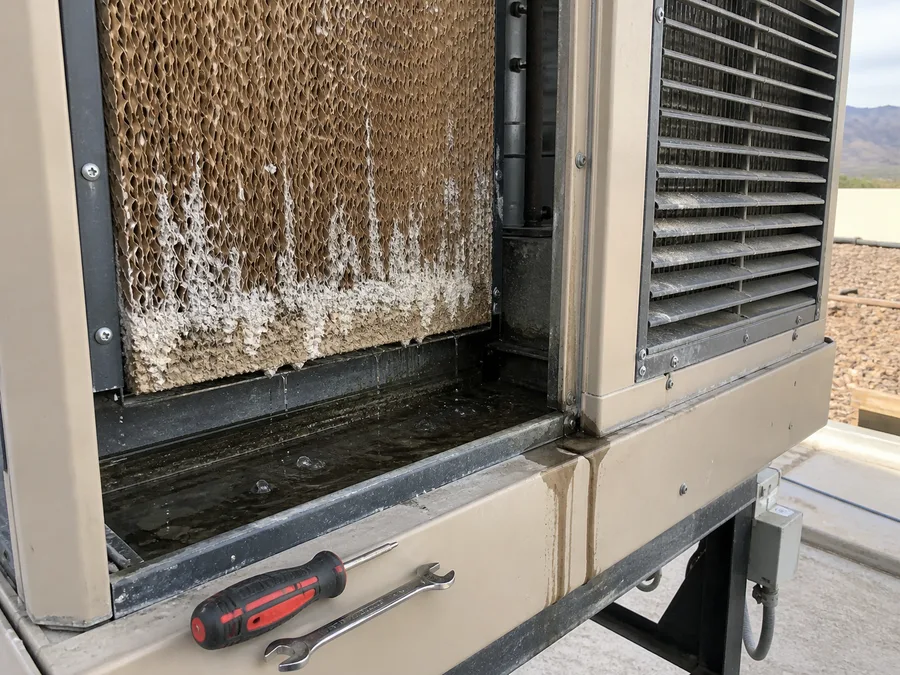
Clean, inspect, and tune up your cooler before heat, scale, or worn parts cause a breakdown.
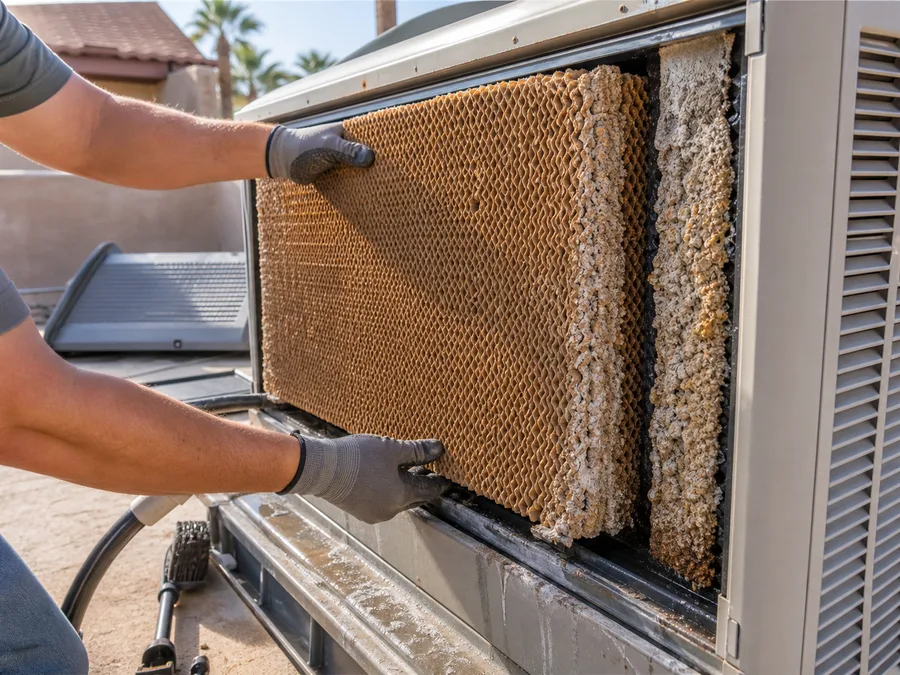
Replace worn or mineral-clogged pads so your cooler can move more air and cool better.
Describe what the cooler is doing and ask whether a repair, a tune-up, or a replacement estimate makes the most sense.