
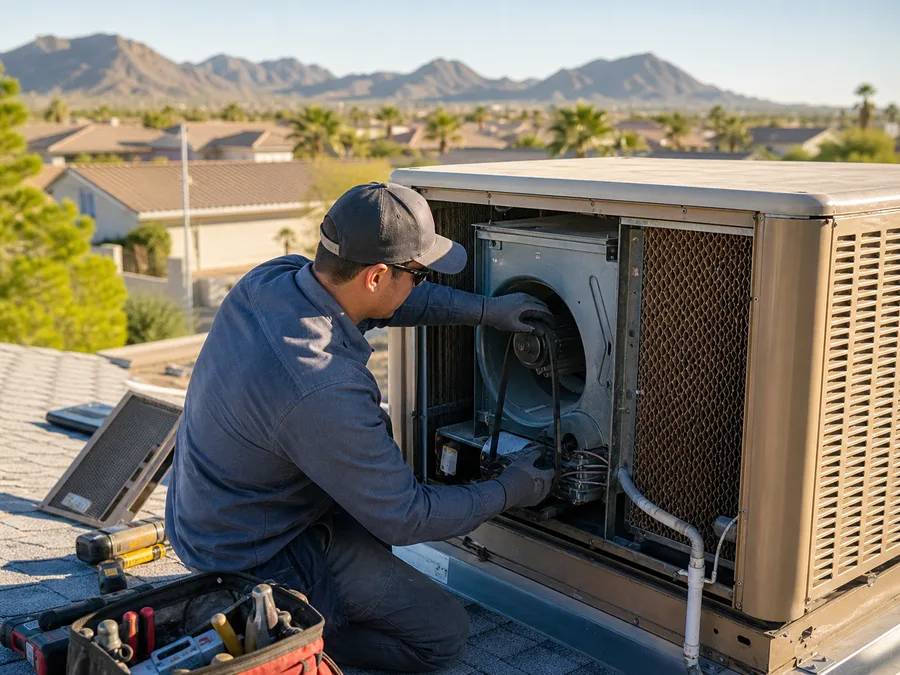
Swamp Cooler Repair
Get help when your cooler blows warm air, leaks, makes noise, or will not turn on.
Get help with warm air, leaks, weak airflow, dry pads, installation, or seasonal service in Provo and nearby Utah County areas.
 Repair & install
 Utah County
 Free estimate

Warm air, weak airflow, leaks, and mineral buildup are common signs that your swamp cooler needs attention. Handle the symptom at your Provo home before a small cooler issue turns into a hotter house.
Get help when your cooler blows warm air, leaks, makes noise, or will not turn on.
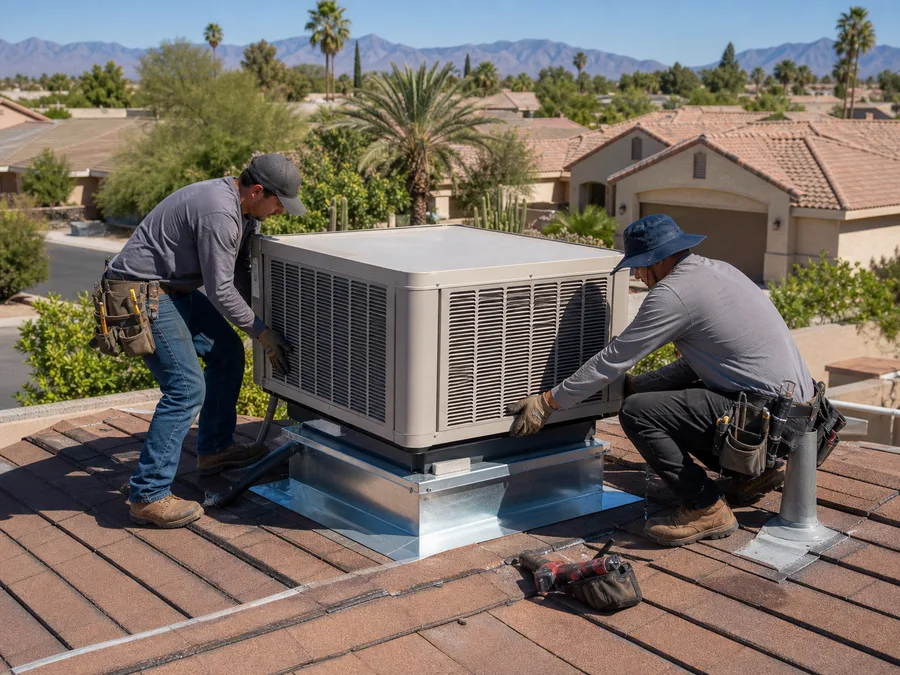
Replace an old unit or install a new evaporative cooler sized for your home and climate.
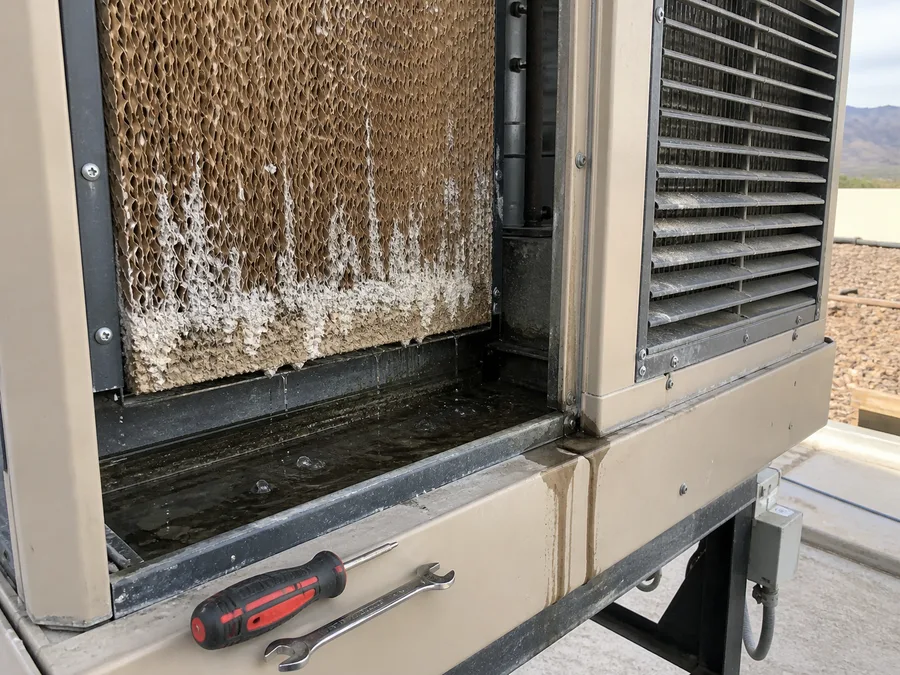
Clean, inspect, and tune up your cooler before heat, scale, or worn parts cause a breakdown.
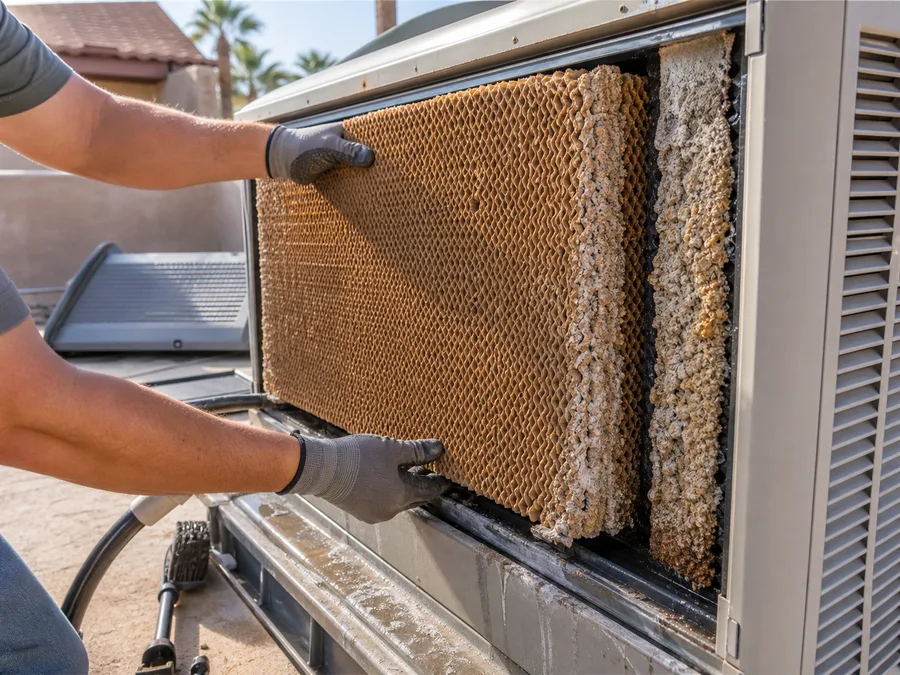
Replace worn or mineral-clogged pads so your cooler can move more air and cool better.
Pick the symptom closest to what you see at your Provo home.
Usually dry or worn pads, or a pump that is not moving enough water.
Warm air fixes Often clogged pads, a loose belt, a slowing motor, or a damper left closed.
Not cooling fixes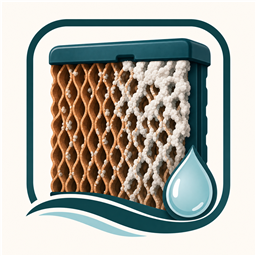
Usually the float valve, overflow, drain fitting, or supply line.
Find the leak
Check the pump, the float valve, and the distributor lines.
Test the pump Provo rates its tap water at about 10 to 15 gpg, so white crust on pads, scale in the reservoir and around the float valve, or clogged distributor lines can show up during heavy summer use.
Hard water and pads Small part failures usually point to repair. Rust, repeat leaks, or an undersized unit point to replacement.
Repair cost guideThe median last spring freeze in Provo is around April 18. Turn the water back on and start the cooler after that, once warm days are steady.
Summer highs near 95°F are when pads, pumps, and belts get tested. Plan a pad and water-flow check before the hottest weeks.
The median first fall freeze in Provo is around October 21, with about 111 freezing nights a year. Drain the water line and pan and cover the cooler before then.
The Provo water supply includes mostly groundwater from mountain springs and deep wells, with some treated water from the Don A. Christiansen Regional Water Treatment Plant. Provo describes its water as moderately hard, with typical levels of 10 to 15 gpg, which can leave mineral scale on pads, pumps, floats, and distributor lines over a summer of use.
Joaquin, Maeser, Riverbottoms, Edgemont, Grandview North, Rock Canyon, Lakewood, and other parts of Utah County.
Provo sits around 4,550 feet between Utah Lake and the Wasatch Range, and NOAA 1991-2020 normals for the Provo BYU station put the July average high near 95°F, with about 25 days in June and 30 in each of July and August reaching 80°F. The median last spring freeze there is around April 18 and the median first fall freeze around October 21. Provo's building design criteria list a roof snow load of 30 psf (40 psf on the benches) and a 30-inch frost line, so rooftop coolers and their water lines should be shut off, drained, and covered before late-October nights. Wildfire smoke or monsoon moisture can also make a cooler feel weaker on some summer afternoons.
Provo's Development Services Department handles building permits through its Building Division, and the city describes building inspection as making sure structures meet the codes adopted by the State of Utah. Utah's statewide State Construction Code currently incorporates the 2024 International Mechanical Code and the 2021 International Residential Code with state amendments. For a new cooler, full replacement, roof work, electrical or water-line changes, or a changed equipment location, ask whether the estimate includes the correct Provo permit and inspection step.
Share the exact service address when you call or request an estimate.
Provo in relation to nearby communities and county lines.
Planning ranges, not a local price list. Roof access, parts, and scale move the final estimate.
| Job | Typical range |
|---|---|
| Common repair total | $90 - $450 |
| Seasonal tune-up | $80 - $200 |
| Pad replacement | $60 - $225 |
More Utah service areas
Choose what the cooler at your Provo home needs. If you are not sure, start with the symptom guide that matches what you see or hear.
See common causes, safe checks, and when the problem needs repair.
Quick answers for homeowners in Provo.
Hot afternoons in Provo average around 95°F with about 24% humidity. Lower humidity allows more evaporation, so a cooler can work well when the pads stay wet, the pump moves enough water, and airflow remains strong.
Many common repairs fall between about $90 and $450. Access, parts, mineral scale, and urgency set the actual estimate for homes in Provo.
With Provo's moderately hard water and a warm season that runs from late spring into September, visually inspect pads every 6 to 8 weeks during the cooling season. Check sooner if airflow drops, pad sections dry out, or white crust starts to form, and follow the cooler and pad manufacturer for the maintenance schedule.
At around 12.5 grains per gallon (gpg), Provo water can leave white scale on pads, water lines, and the reservoir. Once that buildup blocks water flow, the cooler can still run but stop cooling well.