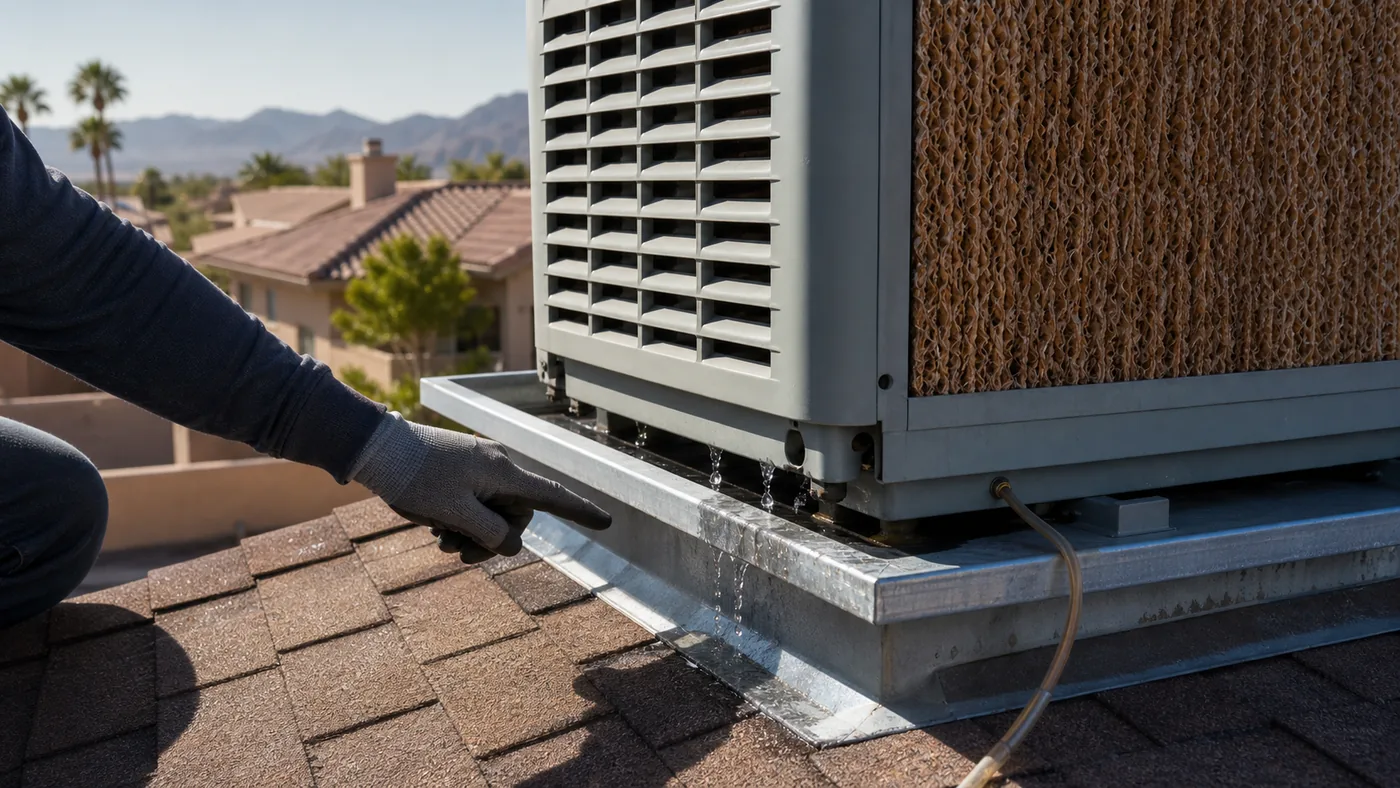
If water is dripping, pooling, or showing up where it should not, note where it appears and when it happens. Those details help narrow the leak faster.
Water is escaping the cooler instead of staying in the pan, lines, or pads.
A swamp cooler uses water constantly, so a small leak can have several causes. The most useful first step is to describe exactly where the water appears and whether it happens while the cooler is running.
Likely causes
Six common reasons a swamp cooler leaks.
You do not need to identify the failed part. These signs help you explain the leak clearly when you call or request an estimate.
Float valve or water level problem
If the float valve sticks or the reservoir fills too high, water can overflow instead of staying inside the cooler.
Cracked or loose water line
A small supply line, fitting, or distributor tube can loosen, crack, or clog, sending water where it should not go.
Drain, overflow, or pan issue
A blocked drain, bad overflow connection, rusted pan, or cracked reservoir can leave water near the base of the unit.
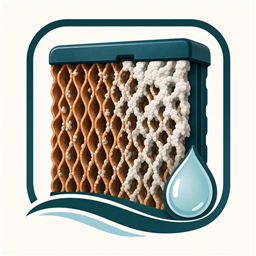
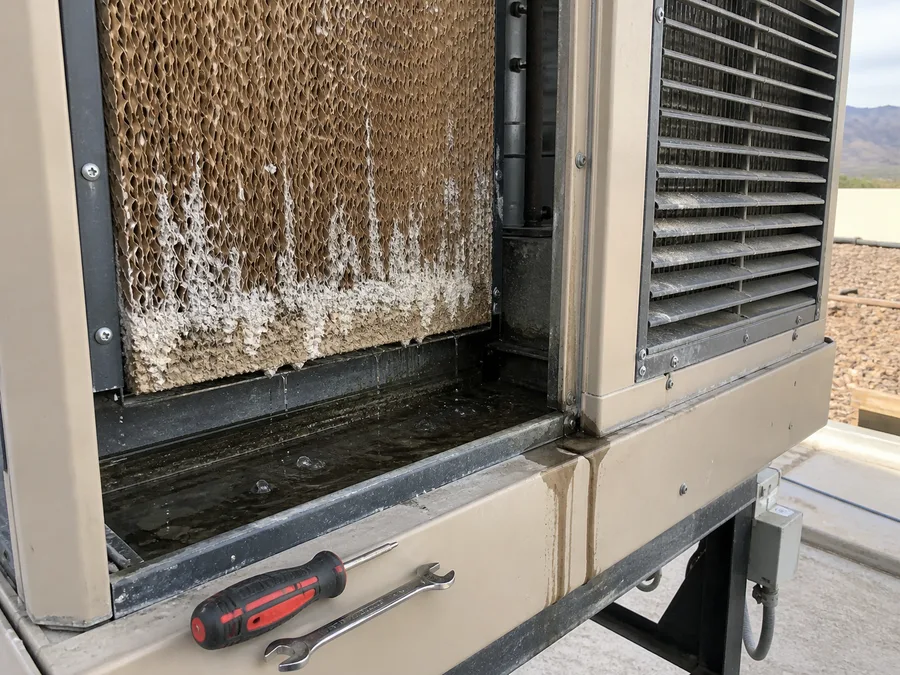
Mineral scale buildup
Hard water can clog pads, lines, and distributors. Water may spill or run unevenly instead of soaking the pads correctly.
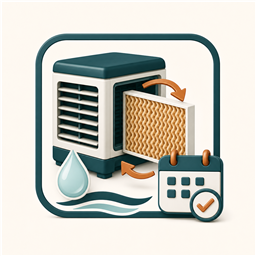
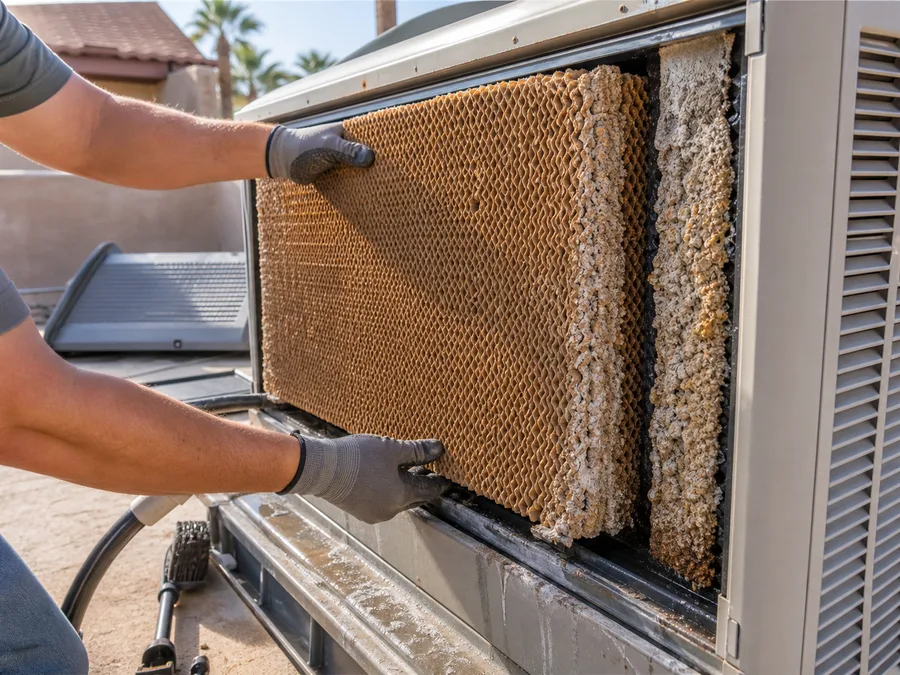
Pads are worn or seated wrong
Pads that do not sit correctly can let water bypass the media and leak around the frame.
Roof or side discharge concern
For roof-mounted or side-mounted coolers, note where water appears. That detail can help separate a cooler leak from a roof, flashing, or drainage issue.
Where the water shows up matters
A drip at the pan, roof curb, wall, drain, or pad frame can point to a different cause, so location is one of the first details to mention.
Safe checks
Check only what you can observe safely.
Do not climb onto a roof, open electrical components, or reach into a running cooler. You can still give a useful description from a safe place.
01
Notice where the water shows up: under the cooler, near a wall, around a roof curb, at a drain, or inside the home.
02
Check whether the leak happens only while the cooler runs or even when it is off.
03
Look for white mineral crust, wet pads, dripping lines, or a reservoir that seems to overflow if you can see it safely.
04
Pay attention to whether the leak is a slow drip, a steady stream, or water pooling after the unit runs.
05
If the cooler is on the roof, do not climb up just to inspect it. Describe what you can see from a safe place.
06
If water is entering the home, near electrical components, or spreading quickly, stop using the cooler and call for help.
When to call
Call when water is pooling, entering the home, or leaking every time the cooler runs.
Water problems can damage roofing, walls, ceilings, or cooler parts if they keep going. A leak is worth handling before it spreads.
Water is dripping from the cooler or pooling near the unit
Water shows up inside the home, near a ceiling, wall, or vent
The cooler leaks whenever it turns on
The reservoir appears to overflow or the pads look soaked unevenly
The leak comes with weak cooling, musty smell, rust, or unusual noise
Call brief
What to mention when you call.
The leak location and timing are the two most helpful details.
Your ZIP code and nearest city
Where the water appears and how much water you see
Whether the cooler is roof-mounted, side-mounted, window-mounted, or ground-level
Whether the leak happens only while running or also when the cooler is off
Any white mineral scale, rust, musty smell, weak airflow, or warm air
When the pads, pump, float valve, or water line were last serviced if you know
Local conditions
Hard water and long cooling seasons can make leaks more likely.
Mineral scale can block water distribution and drains, while long cooling seasons keep lines, pads, and float valves working for months at a time.
Phoenix, AZ14 gpg / 220 cooling days
In Phoenix, hard-water buildup can make lines, pads, and drains more likely to clog. Watch for mineral scale, overflow, or a leak that returns every time the cooler runs.
In Las Vegas, hard-water buildup can make lines, pads, and drains more likely to clog. Watch for mineral scale, overflow, or a leak that returns every time the cooler runs.
In Albuquerque, seasonal checks can still catch loose lines, drain issues, and worn pads. Watch for mineral scale, overflow, or a leak that returns every time the cooler runs.
In Denver, seasonal checks can still catch loose lines, drain issues, and worn pads. Watch for mineral scale, overflow, or a leak that returns every time the cooler runs.
In Salt Lake City, hard-water buildup can make lines, pads, and drains more likely to clog. Watch for mineral scale, overflow, or a leak that returns every time the cooler runs.
White crust is a useful clue
Mineral scale can block water paths, make pads wet unevenly, and turn a small water-flow issue into a leak or weak cooling problem.
Common causes include a stuck float valve, high water level, cracked water line, clogged drain, rusted pan, loose fitting, mineral scale, or pads that are not seated correctly.
Is a leaking swamp cooler urgent?
It can be. Call sooner if water is entering the home, spreading near electrical components, pooling on the roof, or leaking every time the cooler runs.
Can hard water make a swamp cooler leak?
Yes. Mineral scale can clog lines and distributors, which can make water spill unevenly or overflow instead of soaking the pads correctly.
Should I turn off a swamp cooler that is leaking?
If water is pooling, entering the home, or near electrical parts, stop using the cooler and request repair help. For a small drip, still describe when and where it happens when you call.
Can old pads cause water to leak?
Yes. Worn, clogged, or poorly seated pads can let water bypass the pad media and run around the frame.
Do not let a small leak turn into a bigger repair.
If water is showing up where it should not, call or request an estimate and describe exactly where the leak appears.