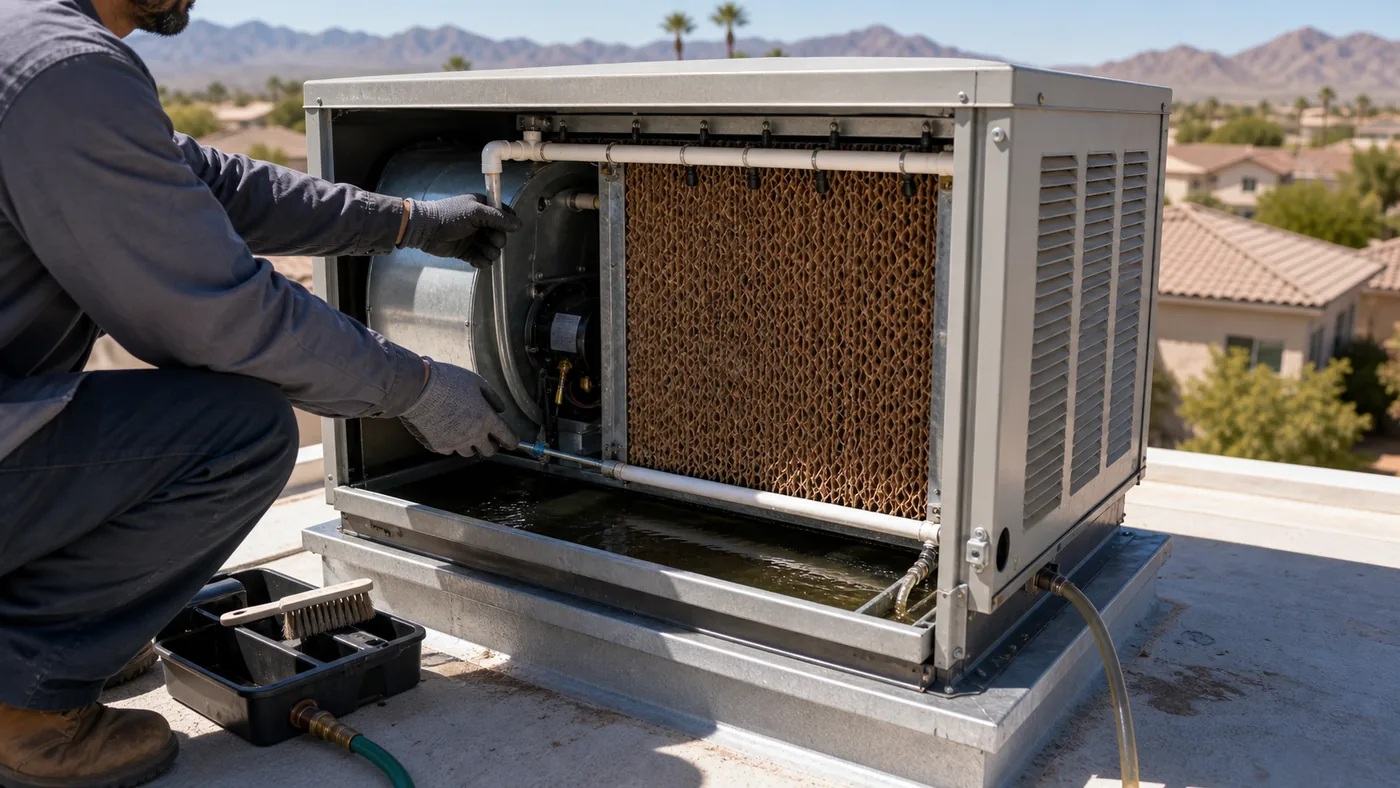
Shut off power and water, drain the line and the pan, clean out scale, close the vent inside, and cover the cabinet. Here is the full order, what each step prevents, and when to have it done for you.
A cooler left full of water is the most common spring repair.
Most winter damage comes from water that was never drained: a split supply line, a rusted pan, or scale that dried hard. Ten minutes of draining in the fall prevents most of it, and closing the vent keeps heat in the house all winter.
Step by step
Nine steps to winterize a swamp cooler.
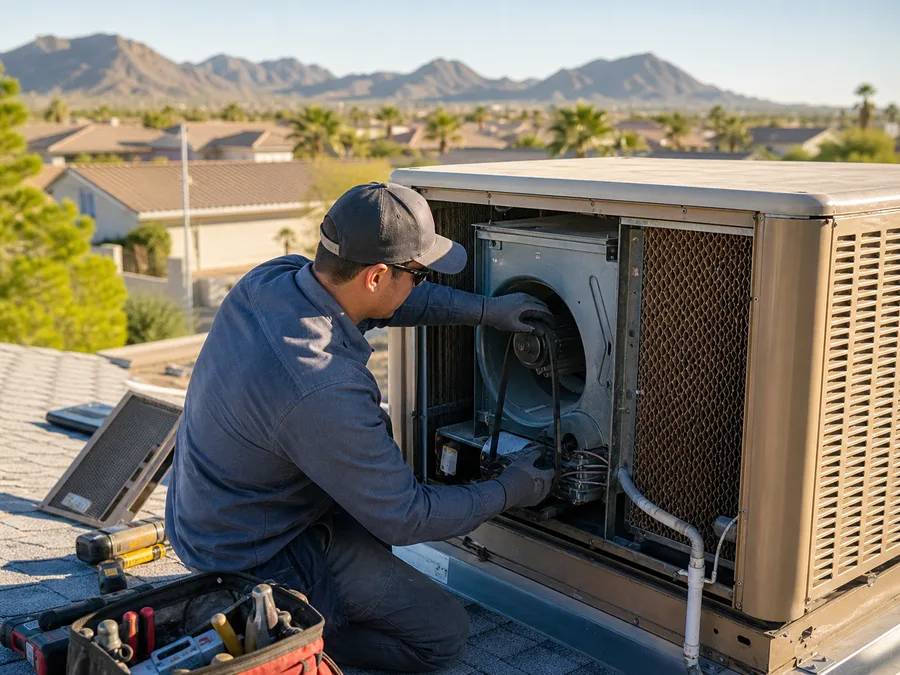
Work only in dry, calm weather. If the cooler is on the roof, use a secured ladder and skip roof work entirely in wind, frost, or ice.
01
Turn the cooler off at the wall control, then cut power to the unit at the breaker, disconnect, or plug so the pump and motor cannot start while you work.
02
Close the water supply valve that feeds the cooler. It is often under a sink, in the attic, near the water heater, or where the small cooler line tees off a hose bib.
03
Drain the water line. Loosen the fitting at the cooler or open the drain point so the small copper or plastic line empties completely. Water left in the line is what splits it in a freeze.
04
Drain the reservoir pan. Pull the drain plug or overflow tube and let the water run off along the roof drain path, not onto shingles or a stucco wall.
05
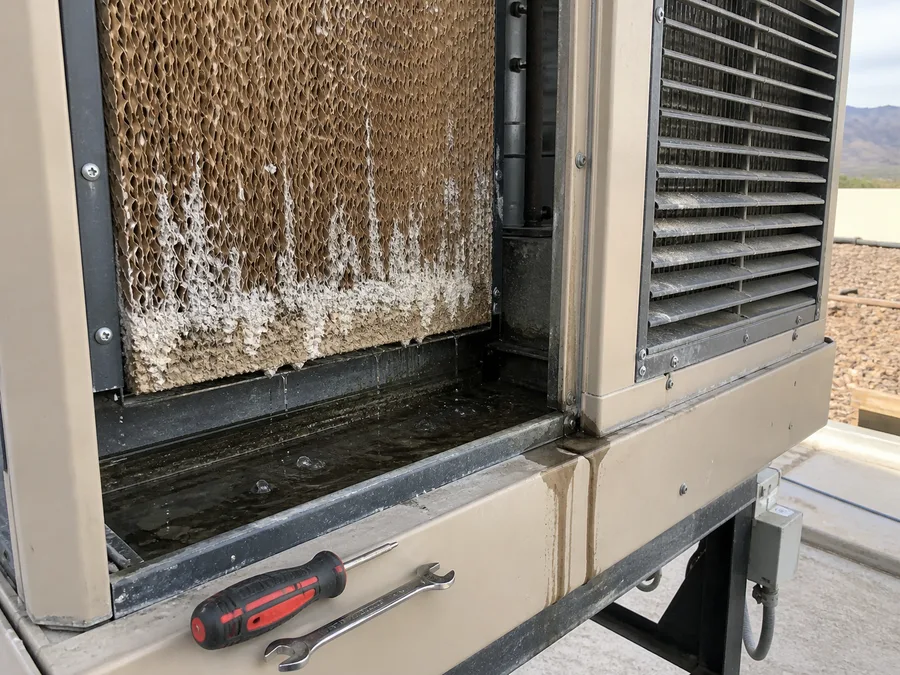
Clean the pan while it is empty. Scoop out sediment, scrape loose mineral scale, and wipe it down. A diluted white vinegar solution softens light scale. Let the pan dry before closing the cooler.
06
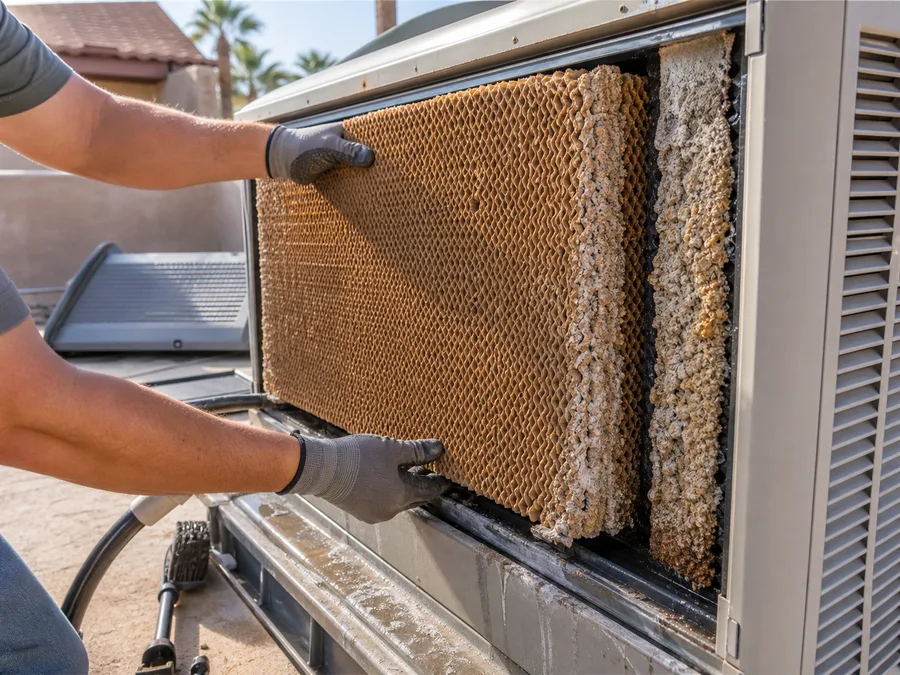
Look over the pads. Aspen pads that are crusted, sagging, or smell musty are usually replaced each season. Rigid media can last several seasons if it is intact. Many people replace pads in spring instead.
07
Unplug the pump and set it in the dry pan or store it indoors. Note the belt condition and any rust spots so they can be handled at spring startup.
08
Close the cooler damper or cover the ceiling vent from inside the house. An open cooler duct lets warm air escape all winter and pulls cold air into the home.
09
Put a breathable cooler cover on the outside of the cabinet and strap it down so wind cannot lift it. A cover keeps out dust, leaves, snow, and nesting birds.
Clean the pan while it is empty
Scale is softest right after draining. Left to dry over winter, it hardens and makes spring startup slower.
What skipping it costs
What can go wrong if the cooler is not winterized.
Split water line
Water trapped in the supply line or fitting can freeze, crack the line, and leak the next time the water is turned on.
Heat loss through the duct
An uncovered vent and open damper can let heated air escape through the cooler all winter.
Rust and hardened scale
Standing water in the pan speeds up rust, and scale left to dry hard is harder to clean in spring.
Debris and pests
Leaves, dust, and birds can collect inside an uncovered cabinet and clog pads and pump screens.
When to call
Have it done for you when the job is on the roof or something is leaking.
A winterizing visit is also a good time to have the pump, belt, motor, and pan checked so the cooler is ready when the heat comes back.
The cooler is roof-mounted and you are not comfortable on a ladder or roof
You cannot find or close the water supply valve
The water line, valve, or fitting is already leaking or cracked
The pan is rusted through or the cabinet has holes
You want the unit checked so it is ready for spring startup
Call brief
What to mention when you call.
Your ZIP code and nearest city
Where the cooler is mounted: roof, side wall, window, or ground
Whether the water line is copper or plastic and where the shutoff is
Any leaks, rust, or damage you noticed this season
Whether you want winterizing only or a spring startup visit too
The cooler brand and model if the label is visible
Local timing
Freeze-prone cities need to winterize earlier.
Higher-elevation and northern service areas see overnight freezes in fall, so draining the line matters most there. Low-desert cities can usually wait until the cooling season ends.
Denver, CO5,280 ft / 105 cooling days
In Denver, drain the water line and pan before the first hard freeze, then close the vent for the heating season.
Shut it down before the first overnight freeze. In higher-elevation cities such as Denver, Colorado Springs, Reno, Salt Lake City, Prescott, and Albuquerque that is often in October. In the low desert, freezes are rare, but most people still drain and cover the cooler once the cooling season ends.
Do I have to drain a swamp cooler for winter?
Yes. Drain both the reservoir pan and the water supply line. Standing water causes rust and scale, and water in the line can freeze and split it.
Should I cover my swamp cooler in winter?
Covering the outside with a breathable, correctly sized cover helps keep out dust, debris, snow, and birds. Also close the damper or cover the ceiling vent inside so heated air does not escape through the duct.
Should I take the pads out for winter?
You can leave pads in place if they are dry and intact, but crusted or musty pads are easier to replace now or at spring startup. Do not leave wet pads in a closed cabinet.
Can I winterize a swamp cooler myself?
Many owners do, especially for window or ground units. Roof-mounted coolers involve ladder and roof work, so it is reasonable to have a technician handle the shutdown and check the unit at the same time.
How much does professional swamp cooler winterizing cost?
Winterizing is usually priced like a seasonal service visit. A broad planning range for a seasonal tune-up is about $80 to $200, depending on access, cleaning needed, and whether parts are replaced.
Beat the first freeze.
If the cooler is on the roof or the line is already leaking, call or request an estimate and have the shutdown done in one visit.