
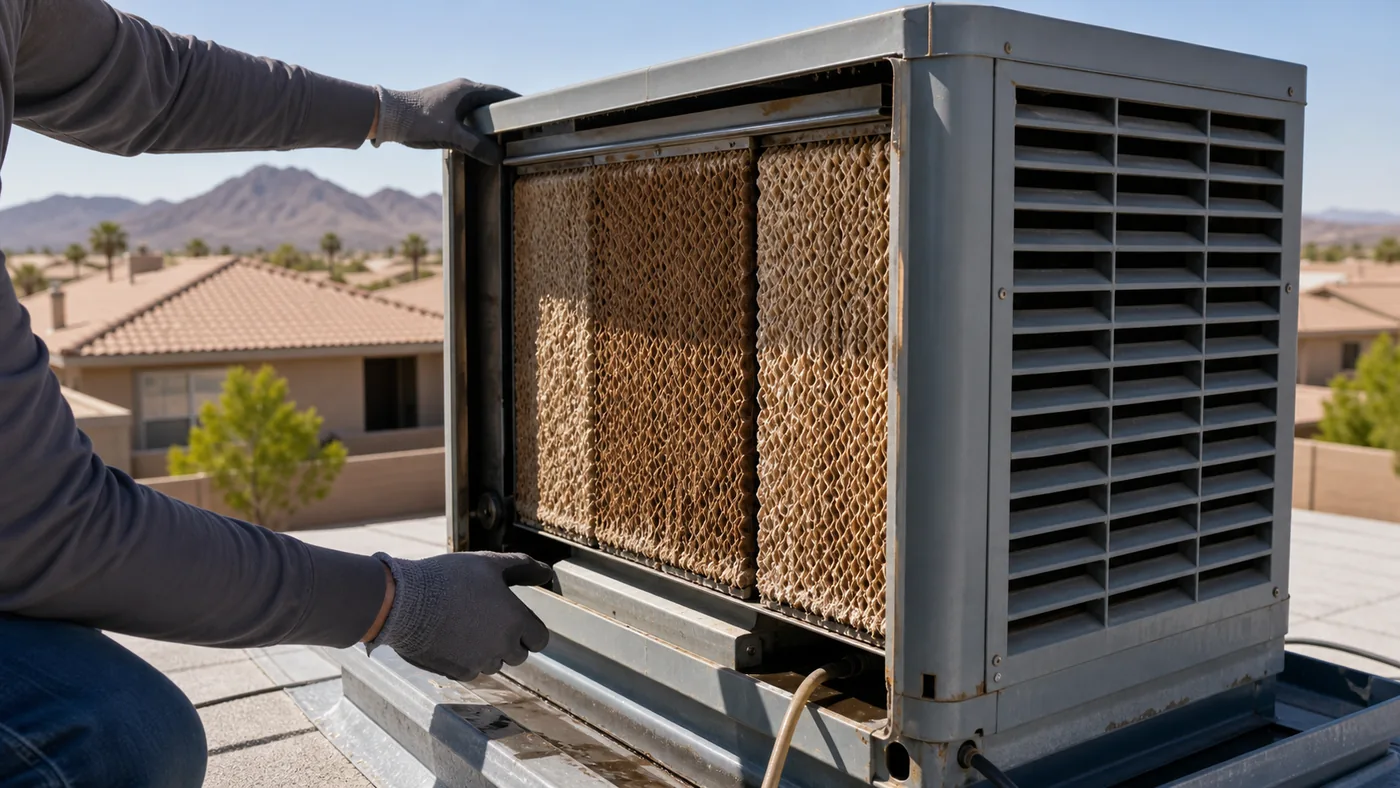
Warm air usually means dry pads, blocked water flow, mineral scale, or weak airflow.
- Fan runs?Check if the pads are wet.
- Pads dry?Mention pump or water-flow trouble.
- White crust?Mineral scale may be blocking cooling.
Warm air usually points to dry pads, blocked water flow, mineral scale, or weak airflow. Check only what you can see safely, then call if the house is still getting hot.
Warm air usually means dry pads, blocked water flow, mineral scale, or weak airflow.
A swamp cooler cools by pulling air through wet pads. If the pads are dry, blocked, worn, or airflow is weak, the unit can sound like it is working while the house keeps getting warmer.
You do not need to identify the failed part. Wet or dry pads, pump noise, visible scale, and weak airflow are the most useful clues.
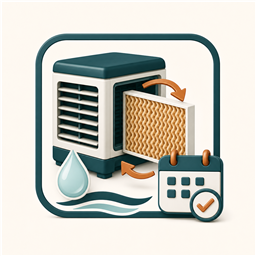
If the pads are not getting wet, the cooler can move air without cooling it. Mineral buildup can also block water and airflow through the pads.
A pump problem, clogged distributor line, closed water supply, float issue, or low reservoir water can keep the pads dry.
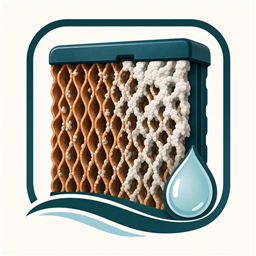
Hard water can leave white crust on pads, lines, and the reservoir. Scale can make a cooler feel weak even when the fan still runs.
A loose belt, dirty pads, duct restriction, fan issue, or motor problem can reduce airflow enough that the cooler does not feel effective.
Do not climb onto a roof or open electrical components. Ground-level observations are enough to decide whether the cooler needs service.
Listen for the fan and note if the sound is normal, slow, or rough.
Look for water on the pads if you can see them safely from ground level.
Check for white mineral crust on visible pads, water lines, or the reservoir.
Notice if the air is warm all day or mainly during the hottest afternoon hours.
Pay attention to whether every room feels weak or only one area does.
These signs usually point to water-flow trouble, pad problems, mineral scale, or airflow that needs a closer look.
Pads stay dry while the fan keeps running The pump is noisy or water is not moving The cooler leaks or leaves water near the unit Air is still warm after pads were replaced Airflow drops, rattles, or smells musty Use these details so the request is clear from the start.
 Your ZIP code and nearest city Whether the fan runs but the air feels warm Whether the pads look wet or dry Any pump noise, leaking water, vibration, or musty smell Whether the cooler is roof-mounted or ground-level When pads were last changed or the unit was last serviced
 In dry-climate service areas, water hardness, heat, humidity, and pad condition can all affect how quickly a cooler stops feeling cold.
14 gpg water hardness, 220 cooling days, and pad checks may need to happen more often during heavy use.
Swamp cooler help in Phoenix16 gpg water hardness, 200 cooling days, and pad checks may need to happen more often during heavy use.
Swamp cooler help in Las Vegas7 gpg water hardness, 140 cooling days, and seasonal checks can still help before peak heat.
Swamp cooler help in Albuquerque5 gpg water hardness, 105 cooling days, and seasonal checks can still help before peak heat.
Swamp cooler help in Denver12 gpg water hardness, 112 cooling days, and mineral scale can make pad and water-flow checks more important.
Swamp cooler help in Salt Lake City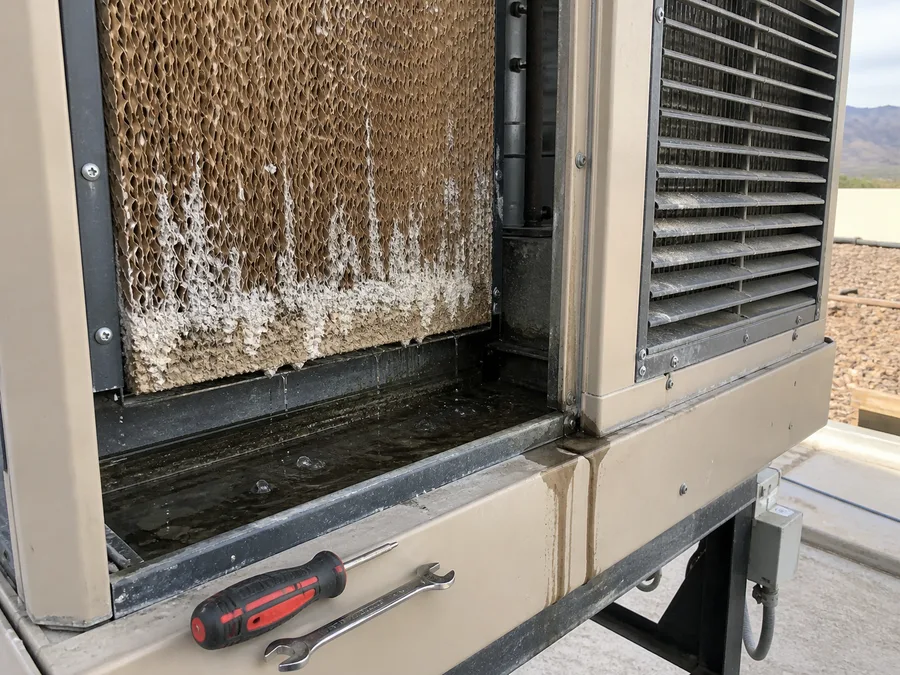
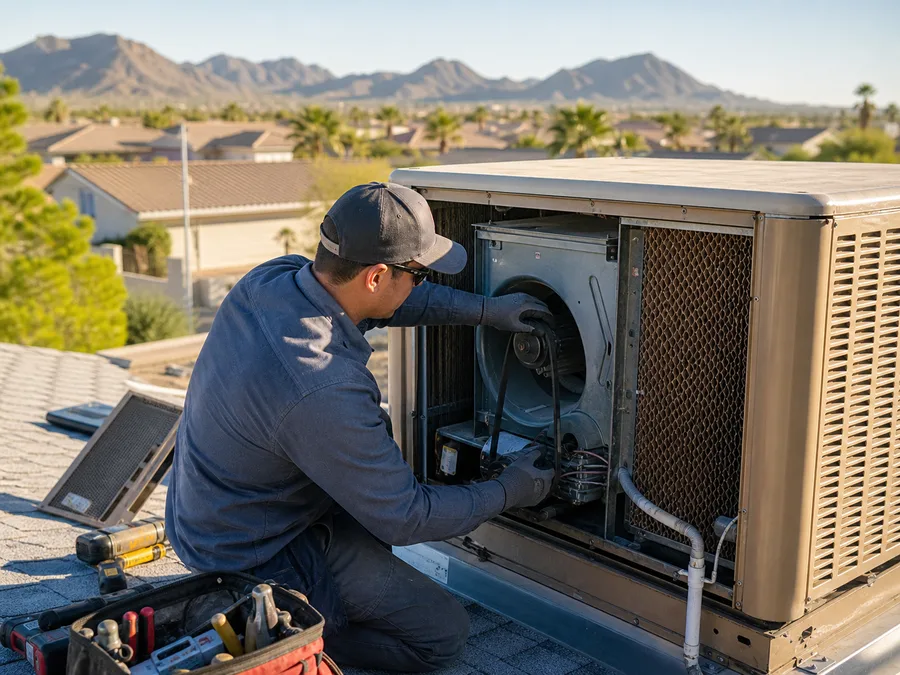
Get help when your cooler blows warm air, leaks, makes noise, or will not turn on.
Clean, inspect, and tune up your cooler before heat, scale, or worn parts cause a breakdown.
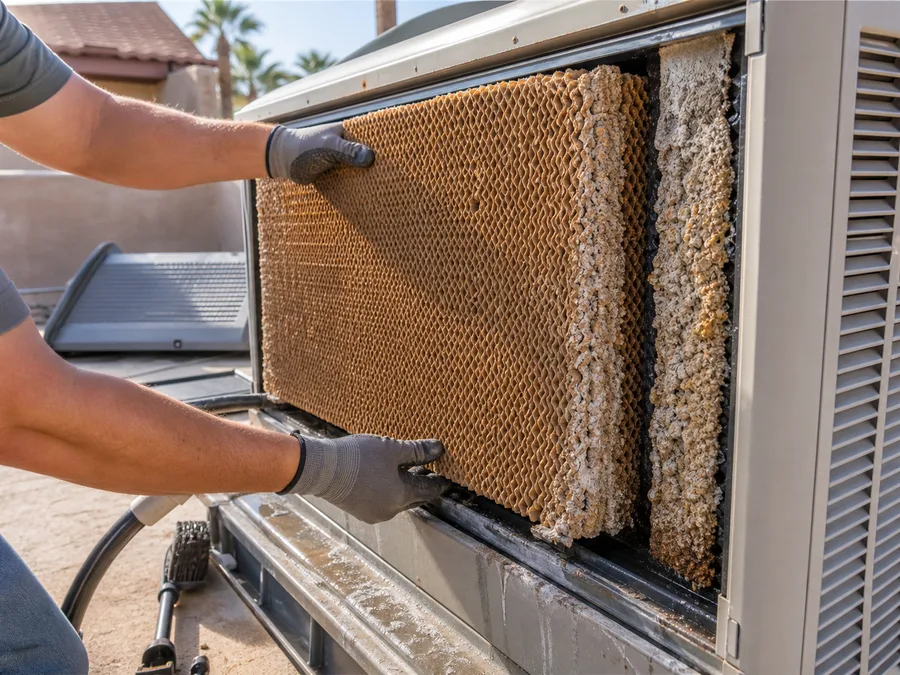
Replace worn or mineral-clogged pads so your cooler can move more air and cool better.
A swamp cooler usually blows warm air when the pads are dry, clogged, or worn, when water is not reaching the pads, when mineral scale blocks water flow, or when airflow is weak.
If the cooler is not cooling, leaking, making unusual noise, or the pads are dry, it is reasonable to stop using it and request service before the issue gets worse.
Yes. Pads that are old, dirty, dry, or covered with mineral scale may not hold and distribute water well, which can make the air feel warm.
Call if the fan runs but the air is warm, the pads stay dry, the pump is noisy, the cooler leaks, airflow is weak, or the unit keeps having the same problem after basic checks.
If the cooler is running but the house is still warm, call or request an estimate and describe what the unit is doing.