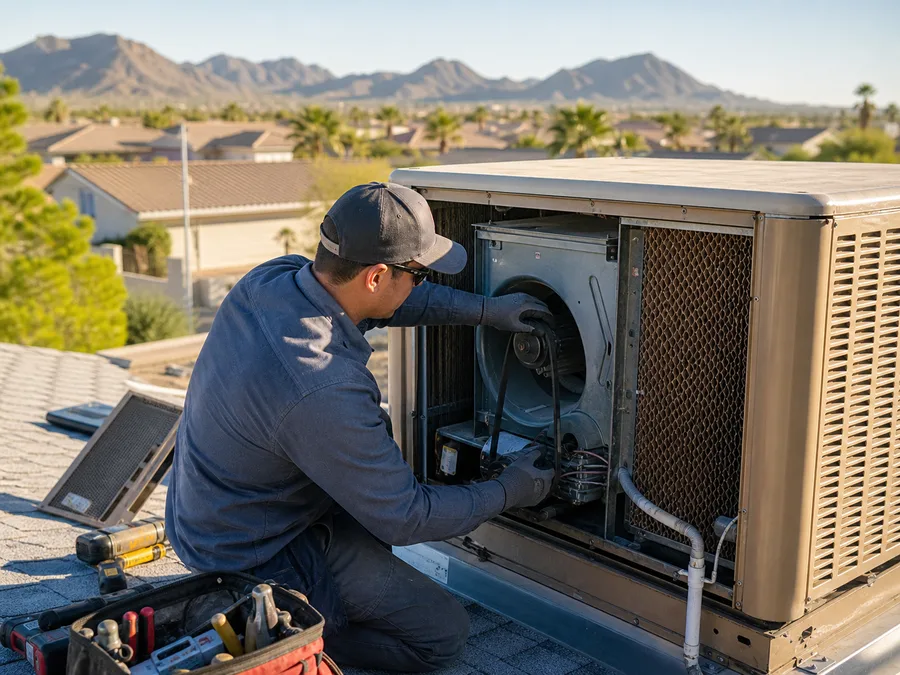
Use this checklist before peak heat to catch weak airflow, dry pads, mineral scale, pump trouble, leaks, and startup problems before the house gets hot.
A cooler can lose performance before it fully breaks.
Swamp cooler maintenance is mainly about keeping air moving through clean, wet pads. If pads clog, water stops flowing, or the pump gets noisy, the cooler can start blowing weaker or warmer air during peak heat.
Checklist
What to check before peak heat.
You do not need to open the unit yourself. These are the maintenance areas to ask about when you call or request an estimate.
Pads
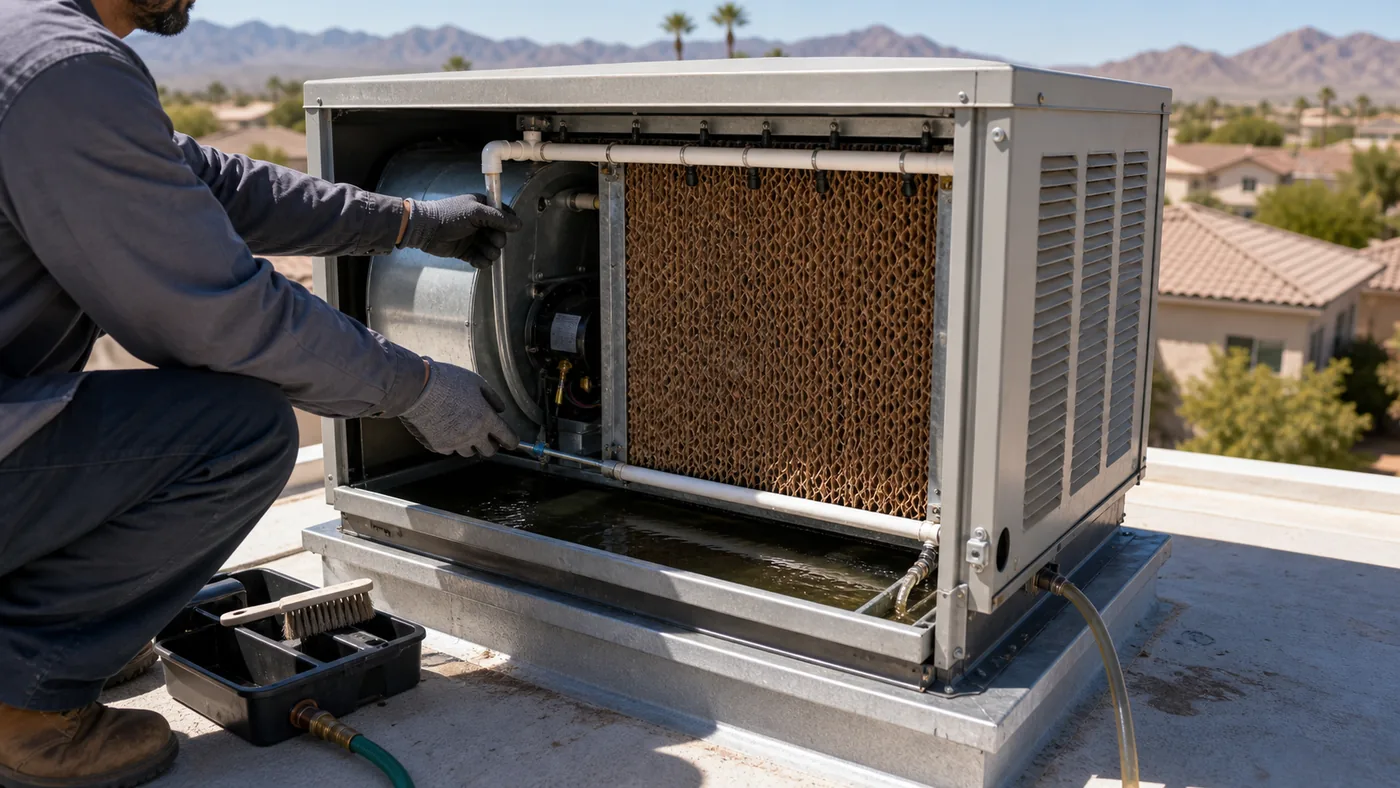
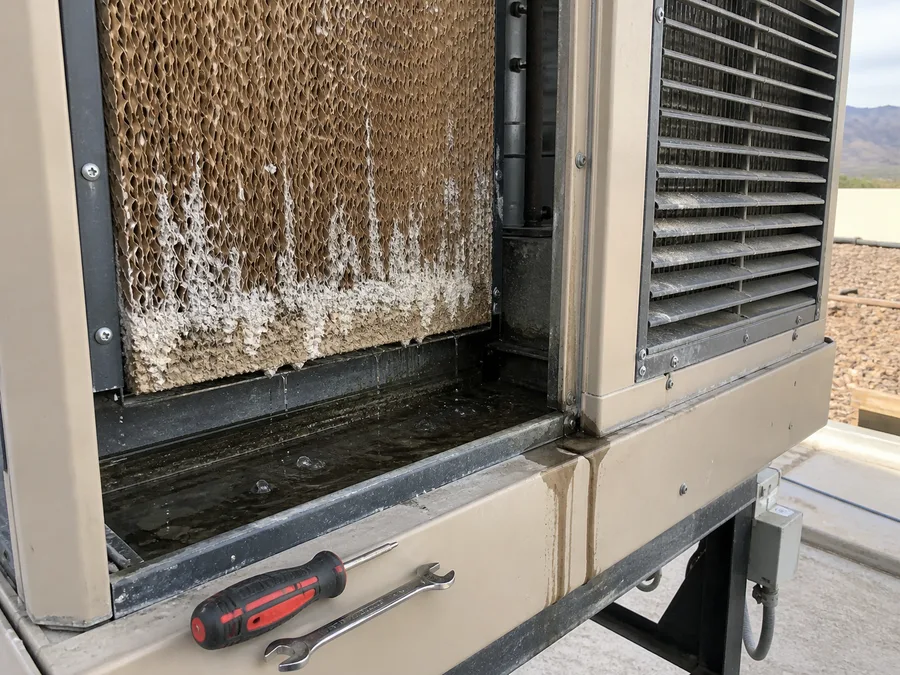
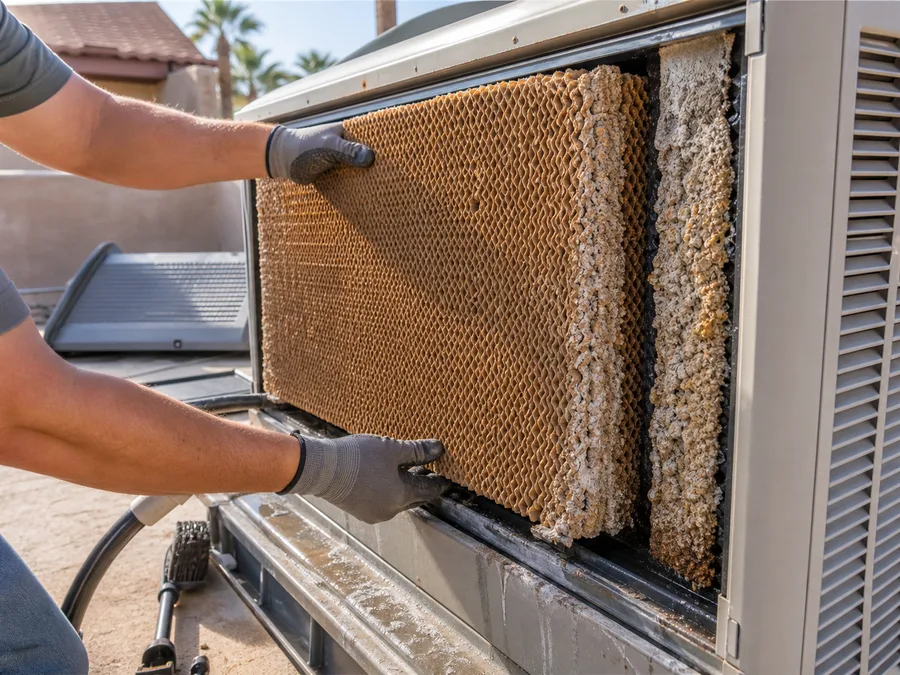
Look for pads that are dry, brittle, sagging, musty, dirty, or covered with white mineral buildup. Worn pads can reduce cooling before anything else feels broken.
Water flow
Water should reach the pad media evenly. Uneven wetting, dry corners, clogged distributor lines, or low reservoir water can lead to warm air.
Pump and float
Pump noise, slow water movement, a stuck float valve, or a reservoir that will not fill correctly can turn into no-cooling days.
Mineral scale
Hard water can leave white crust on pads, lines, pumps, reservoirs, and the cabinet. Scale can block water and airflow.
Airflow
Weak airflow can come from worn pads, belt tension, fan issues, motor trouble, blocked duct paths, or a unit that needs cleaning.
Leaks and access
Check for visible drips, overflow, pan rust, line leaks, and whether the cooler is roof-mounted or easy to access safely.
Maintenance is mostly about airflow and water flow
Clean pads, steady water distribution, a working pump, and less mineral buildup help the cooler stay useful before peak heat.
Safe observations
Check only what you can see or hear safely.
Do not climb onto a roof, reach into a running cooler, or open electrical components. Simple observations can still reveal whether pads, water flow, or airflow need attention.
01
Listen for fan and pump sounds before the hottest part of the day.
02
Look at visible pads only from a safe place. Do not climb onto a roof just to inspect the cooler.
03
Notice whether air feels weak, warm, musty, or uneven from room to room.
04
Watch for white mineral crust on visible pads, water lines, or around the reservoir.
05
Look for water leaks, overflow, dripping, or wet spots near the cooler.
06
Write down when the pads were last changed and when the cooler was last serviced.
Season timing
Maintenance changes through the season.
A pre-season check is different from a mid-summer airflow problem or end-of-season shutdown.
Before startup: Clean and inspect before long hot afternoons Ask about pad condition, reservoir cleaning, water lines, float valve, pump operation, belt condition, and whether the cooler starts cleanly.
Early heat: Watch for weak airflow or warm air If the cooler works in the morning but struggles later, note the time of day, outside conditions, and whether the issue affects the whole home.
Peak season: Check pads and water flow during heavy use Dry-climate homes with hard water may need pad checks more often during long cooling seasons.
Shutdown: Ask about end-of-season care In colder high-desert areas, draining, cleaning, covering, or winterizing can help reduce freeze and scale issues before next season.
When to call
Call before a small maintenance issue turns into weak cooling.
Maintenance is easiest before the hottest week. If the cooler already feels weak or warm, describe the symptom and ask whether maintenance or repair makes more sense.
The cooler blows warm air after startup
Airflow is weaker than last season
Pads look dirty, dry, brittle, musty, or crusted with mineral buildup
Pump noise, water-line clogging, or uneven pad wetting shows up
Water leaks, overflow, rust, or standing water appears near the unit
Call brief
What to mention when requesting maintenance.
Good maintenance requests include the season, symptom, access, pad age, and whether you are seeing mineral scale or water-flow trouble.
Your ZIP code and nearest city
Whether this is seasonal startup, tune-up, cleaning, pad replacement, or winterization
When the cooler was last serviced and when pads were last replaced
Whether the unit is roof-mounted, side-mounted, window-mounted, or ground-level
Any warm air, weak airflow, pump noise, leak, musty smell, or white mineral buildup
Whether the problem happens all day or mainly during peak afternoon heat
Local maintenance conditions
Hard water and long cooling seasons change what to watch.
Dry-climate homes can rely on swamp coolers for long stretches. In hard-water areas, pads, water lines, and water distributors may need closer attention during heavy use.
Phoenix, AZ14 gpg / 220 cooling days
In Phoenix, hard water can make pad checks and scale cleaning more important. Watch the pad age, visible scale, and changes in water flow.
Scale is easier to handle before peak heat
A seasonal check can catch white buildup, clogged water paths, and pad problems before the cooler is working hard every afternoon.
Maintenance is most useful before peak heat, especially before the first long stretch of hot afternoons. In heavy-use areas, pads and water flow may also need checks during the cooling season.
What should be included in swamp cooler maintenance?
Common maintenance items include checking pads, pump, float valve, reservoir, water lines, distributor lines, belt condition, airflow, leaks, mineral scale, and seasonal startup or shutdown needs.
Can maintenance prevent weak airflow?
Maintenance can help catch dirty pads, mineral scale, belt issues, fan trouble, blocked water flow, and startup problems before airflow drops during peak heat.
How often should swamp cooler pads be checked?
In long hot seasons or hard-water areas, a visual check every 4 to 6 weeks during heavy use can catch dry sections, scale, sagging, or odor early. Follow the cooler and pad manufacturer for the actual maintenance and replacement schedule.
Should I request maintenance or repair?
Choose maintenance for seasonal startup, cleaning, pad checks, water-flow checks, or winterization. Choose repair if the cooler already blows warm air, leaks, makes noise, trips power, or will not start.
Get ahead of weak airflow before the next heat wave.
If the cooler has not been checked this season, call or request an estimate and mention pads, water flow, scale, airflow, and access.