
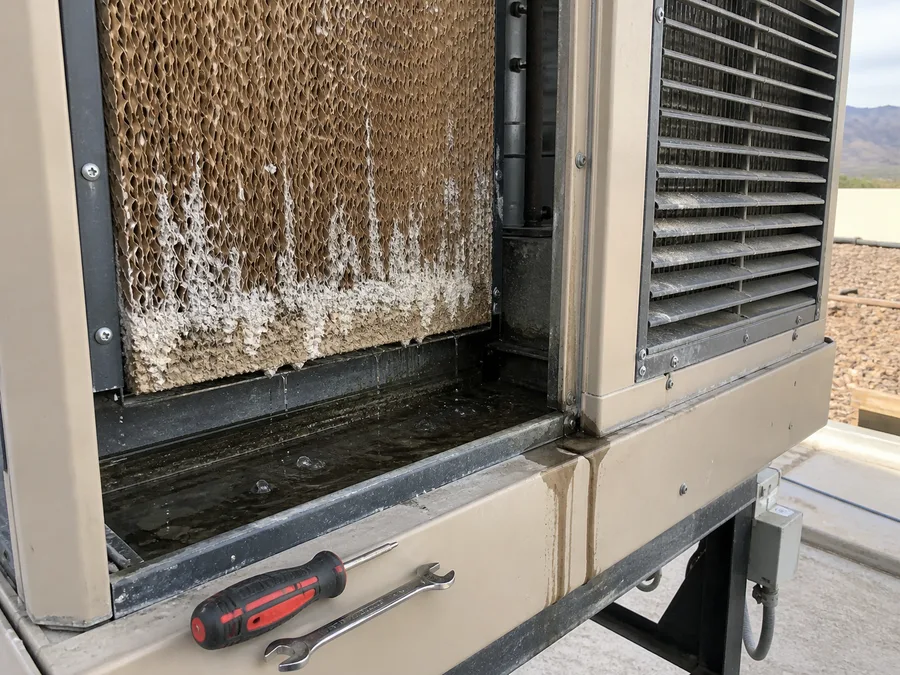
Hard water leaves mineral scale. That scale can clog pads and water lines, so the cooler may run but cool poorly.
- White crust?Mention mineral scale.
- Dry pads?Ask about water flow.
- Weak cooling?Ask about pads and pump.
White mineral buildup can make pads less effective, block water flow, weaken airflow, and make the cooler feel warmer than it should.
Hard water leaves mineral scale. That scale can clog pads and water lines, so the cooler may run but cool poorly.
Evaporative cooling works when hot, dry air passes through wet pads. Hard-water minerals can coat those pads, clog small water paths, and reduce the wet surface the cooler needs.
These details are useful when you call because they point toward pads, water distribution, pump flow, or maintenance instead of a generic cooling complaint.
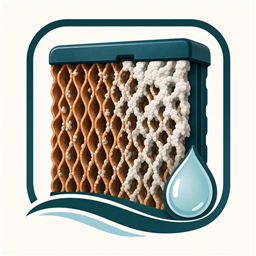
Mineral deposits can coat the pad surface and make it harder for water and air to move through the cooler.
Scale can clog water distribution lines or pad channels, so parts of the pad stay dry even when the pump is running.
When pads cannot stay wet evenly, the cooler may still blow air but stop giving the strong cooling homeowners expect.
Scale rarely affects just one part. It can show up on the pads, in the water lines, around the pump, and inside the reservoir.
Pads: Less wet surface area Water lines: Uneven water distribution Pump and reservoir: More debris to move through Airflow: More resistance through the padHard-water buildup can look small at first, but once pads stop wetting evenly, the cooler may struggle most during the hottest part of the day.
 Pads have thick white crust or hard deposits Water reaches one pad but not another The cooler blows warm air even after pads were cleaned Pads smell musty, sag, crumble, or dry out quickly The reservoir has heavy scale, sediment, or dirty standing water Pump noise, weak flow, or clogged lines show up with the pad problem
 You do not need to diagnose the cooler. Just describe what you can see safely.
Your ZIP code and nearest city
Whether the buildup looks like white crust, powder, flakes, or hard deposits
Whether pads are wet evenly or dry in certain sections
When the pads were last replaced or cleaned
Whether the cooler is roof-mounted, side-mounted, window-mounted, or ground-level
Whether the unit also has warm air, weak airflow, leaks, odor, or pump noise
If your cooler runs through a long dry season, mineral buildup can return before the season is over. A pad check is often worth asking about before weak cooling becomes urgent.
Check pads before peak heat, especially in hard-water areas. Mention white crust instead of only saying the cooler is not cooling. Ask whether pads, water lines, reservoir cleaning, or pump checks should be included. If scale returns quickly, ask whether the water distribution system should be inspected. If the cooler is older, ask whether repeated scale damage changes the repair-or-replace conversation. Water hardness is shown in grains per gallon (gpg). A higher number means more dissolved calcium and magnesium can remain as scale after water evaporates, although pad age and water flow still matter.
At 16.5 gpg in Chandler, visible scale, pad age, and uneven wetting are especially useful clues.
Swamp cooler help in ChandlerAt 16 gpg in Henderson, visible scale, pad age, and uneven wetting are especially useful clues.
Swamp cooler help in HendersonAt 16 gpg in Las Vegas, visible scale, pad age, and uneven wetting are especially useful clues.
Swamp cooler help in Las VegasAt 14 gpg in Phoenix, visible scale, pad age, and uneven wetting are especially useful clues.
Swamp cooler help in PhoenixAt 13 gpg in Mesa, visible scale, pad age, and uneven wetting are especially useful clues.
Swamp cooler help in MesaAt 12 gpg in Salt Lake City, visible scale, pad age, and uneven wetting are especially useful clues.
Swamp cooler help in Salt Lake City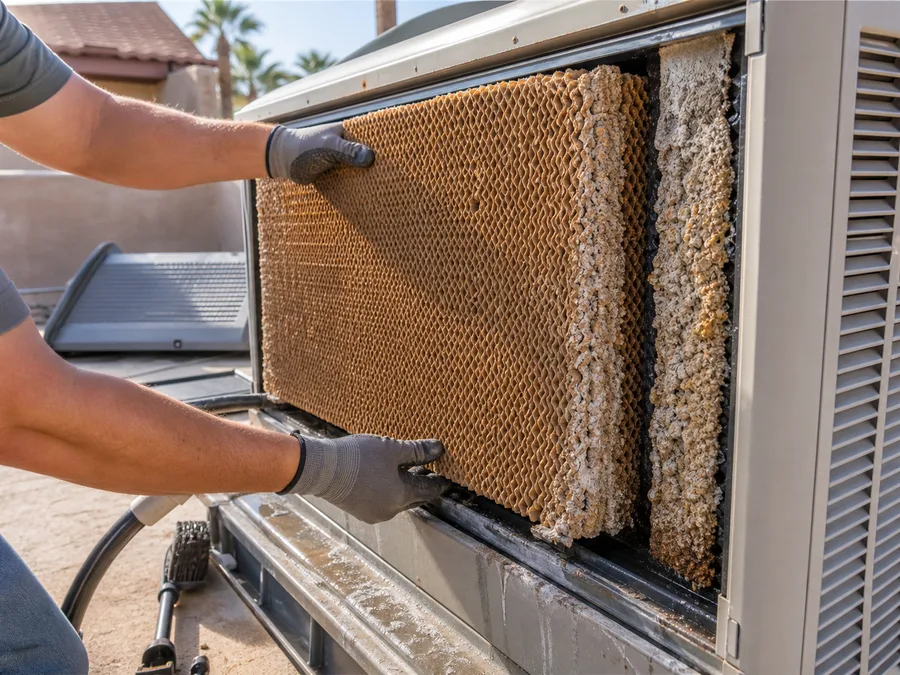
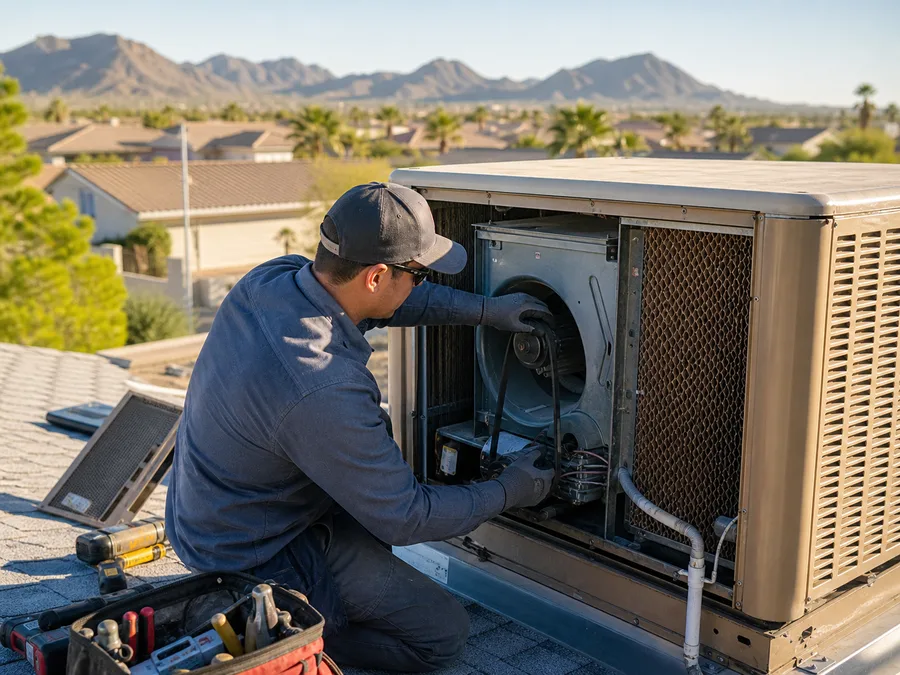
Get help when your cooler blows warm air, leaks, makes noise, or will not turn on.
Clean, inspect, and tune up your cooler before heat, scale, or worn parts cause a breakdown.
Replace worn or mineral-clogged pads so your cooler can move more air and cool better.
Yes. Hard water can leave mineral scale on pad media. Over time that buildup can reduce water contact, restrict airflow, and make the cooler feel weaker.
It often looks like white crust, chalky buildup, hard deposits, or flakes on the pads, reservoir, pump area, or water lines.
Light buildup may be cleaned, but brittle, musty, sagging, or heavily crusted pads are usually better candidates for replacement.
It can. If scale keeps pads from staying wet or blocks water distribution, the fan may run while the air feels warmer than it should.
Mention visible white crust, whether pads are wet evenly, pad age, weak airflow, warm air, pump noise, leaks, and your ZIP code.
Call or request an estimate and describe the scale, pad condition, water flow, and ZIP code.