
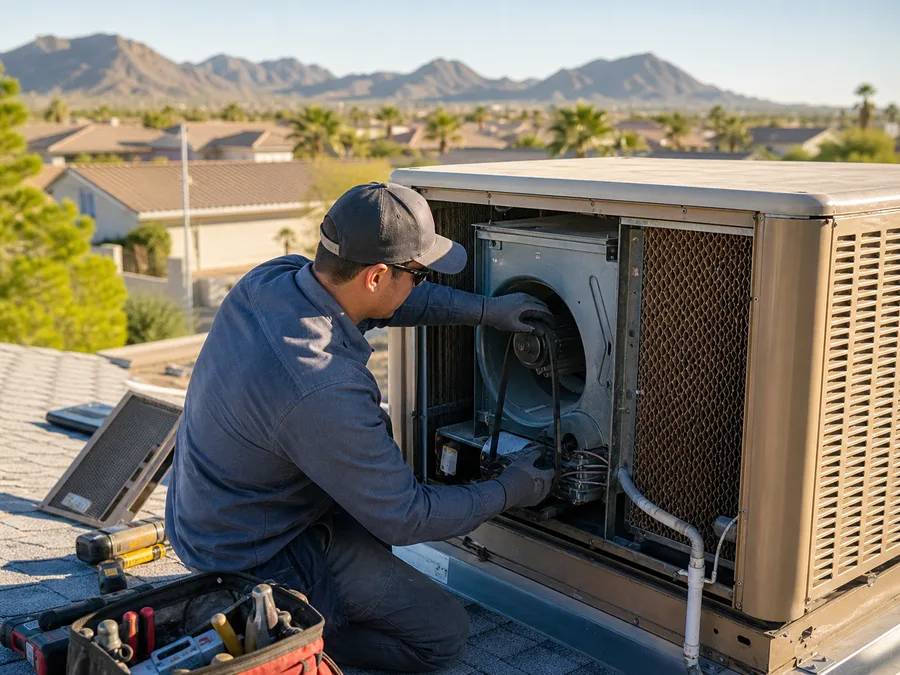
Swamp Cooler Repair
Get help when your cooler blows warm air, leaks, makes noise, or will not turn on.
Get help with warm air, leaks, weak airflow, dry pads, installation, or seasonal service in Loveland and nearby Larimer County areas.
 Repair & install
 Larimer County
 Free estimate

Warm air, weak airflow, leaks, and mineral buildup are common signs that your swamp cooler needs attention. Handle the symptom at your Loveland home before a small cooler issue turns into a hotter house.
Get help when your cooler blows warm air, leaks, makes noise, or will not turn on.
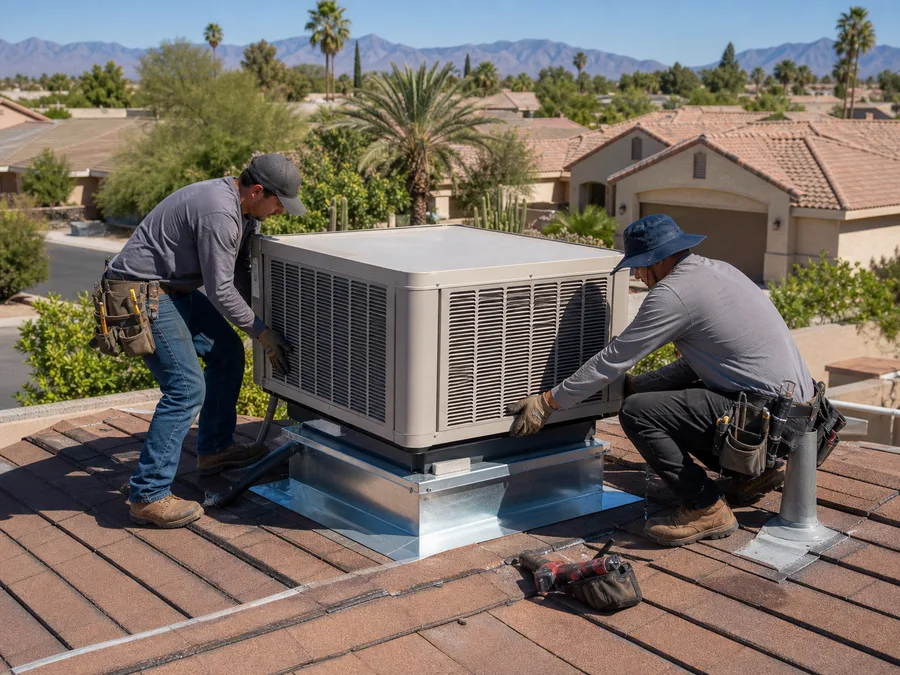
Replace an old unit or install a new evaporative cooler sized for your home and climate.
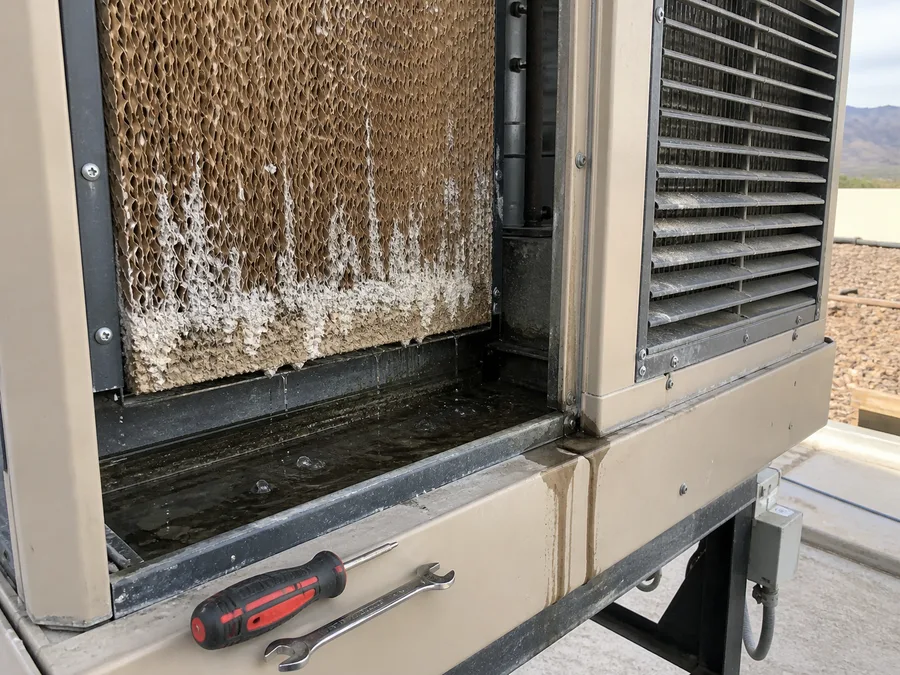
Clean, inspect, and tune up your cooler before heat, scale, or worn parts cause a breakdown.
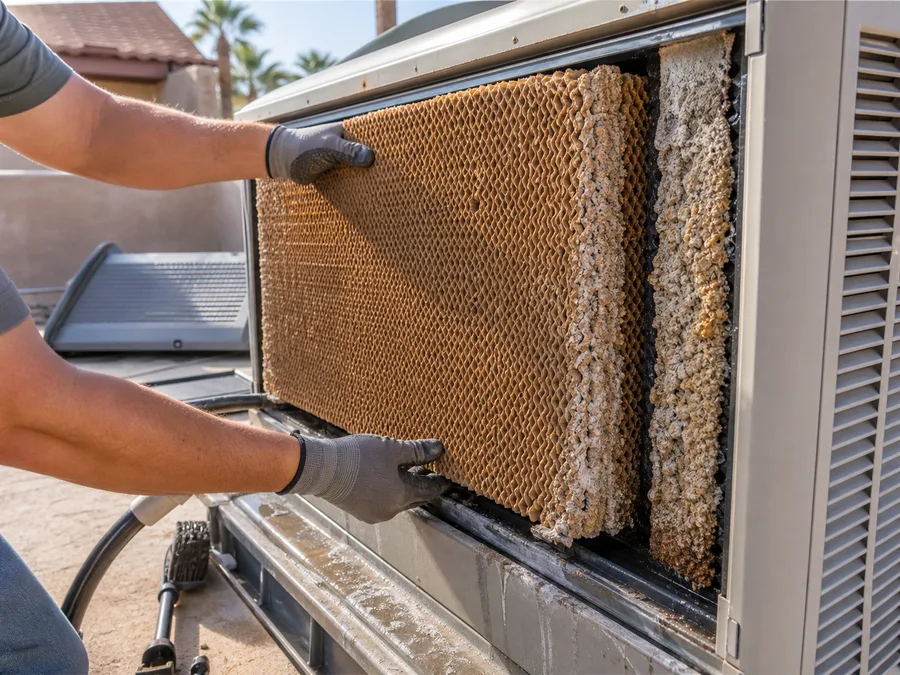
Replace worn or mineral-clogged pads so your cooler can move more air and cool better.
Pick the symptom closest to what you see at your Loveland home.
Usually dry or worn pads, or a pump that is not moving enough water.
Warm air fixes Often clogged pads, a loose belt, a slowing motor, or a damper left closed.
Not cooling fixes
Usually the float valve, overflow, drain fitting, or supply line.
Find the leak
Check the pump, the float valve, and the distributor lines.
Test the pump Loveland's soft mountain water (about 1.4 gpg) usually builds scale slowly, but evaporation concentrates minerals in the reservoir over a summer, so a thin white film, a sticky float, or a dust-and-mineral crust on the pads can still show up by late season.
Hard water and pads Small part failures usually point to repair. Rust, repeat leaks, or an undersized unit point to replacement.
Repair cost guideThe median last spring freeze in Loveland is around May 10. Turn the water back on and start the cooler after that, once warm days are steady.
Summer highs near 89°F are when pads, pumps, and belts get tested. Plan a pad and water-flow check before the hottest weeks.
The median first fall freeze in Loveland is around October 1, with about 174 freezing nights a year. Drain the water line and pan and cover the cooler before then.
The Loveland water supply includes Big Thompson River and Green Ridge Glade Reservoir water, drawn from both sides of the Continental Divide through the Colorado-Big Thompson and Windy Gap projects and treated at the city water treatment plant. The 2025 water quality report lists a yearly average hardness of 24 mg/L (about 1.4 gpg), and 2026 monthly tests have stayed near 24 to 25 mg/L, so Loveland water is soft compared with most dry-climate cooler markets.
Downtown Loveland, Centerra, Lake Loveland, Boyd Lake, Mariana Butte, West Loveland, and other parts of Larimer County.
Loveland sits near 5,000 feet where the Big Thompson Canyon opens onto the plains, so July afternoons usually reach the upper 80s (the NOAA normal July high at the Loveland 2N station is about 89°F) and nights cool off quickly. The median last spring freeze there is around May 10 and the median first fall freeze around October 1, so plan startup after the last freeze and drain the unit before the first one. Summer thunderstorms can bring hail and short humid spells, and smoke or ash from mountain wildfires west of town, such as the 2020 Cameron Peak Fire and the 2024 Alexander Mountain Fire, can load pads with fine particles.
Inside Loveland city limits, the City of Loveland Building Division handles building permits and inspections, and it lists adopted building code changes (ICC 2024) that took effect July 1, 2026. The city's permitting FAQ says a homeowner can do their own work on a primary residence with a homeowner affidavit, while mechanical work in rentals, multi-family, and non-residential buildings requires a City of Loveland contractor's license. For a new cooler, replacement, rooftop or wall-opening change, electrical work, or water-line work, ask whether the estimate includes the correct Loveland permit and inspection step.
Share the exact service address when you call or request an estimate.
Loveland in relation to nearby communities and county lines.
Planning ranges, not a local price list. Roof access, parts, and scale move the final estimate.
| Job | Typical range |
|---|---|
| Common repair total | $90 - $450 |
| Seasonal tune-up | $80 - $200 |
| Pad replacement | $60 - $225 |
More Colorado service areas
Choose what the cooler at your Loveland home needs. If you are not sure, start with the symptom guide that matches what you see or hear.
See common causes, safe checks, and when the problem needs repair.
Quick answers for homeowners in Loveland.
Hot afternoons in Loveland average around 89°F with about 35% humidity. Lower humidity allows more evaporation, so a cooler can work well when the pads stay wet, the pump moves enough water, and airflow remains strong.
Many common repairs fall between about $90 and $450. Access, parts, mineral scale, and urgency set the actual estimate for homes in Loveland.
With soft water and a short season between the last spring freeze and the first fall freeze, visually check the pads at spring startup and again during July heat, sooner after wildfire smoke, dust, or hail, and follow the cooler and pad manufacturer for the maintenance schedule.
At around 1.4 grains per gallon (gpg), Loveland water can leave white scale on pads, water lines, and the reservoir. Once that buildup blocks water flow, the cooler can still run but stop cooling well.