Swamp Cooler Repair
Get help when your cooler blows warm air, leaks, makes noise, or will not turn on.
Get help with warm air, leaks, weak airflow, dry pads, installation, or seasonal service in Denver and nearby Denver County areas.
 Repair & install
 Denver County
 Free estimate
Warm air, weak airflow, leaks, and mineral buildup are common signs that your swamp cooler needs attention. Handle the symptom at your Denver home before a small cooler issue turns into a hotter house.
Get help when your cooler blows warm air, leaks, makes noise, or will not turn on.
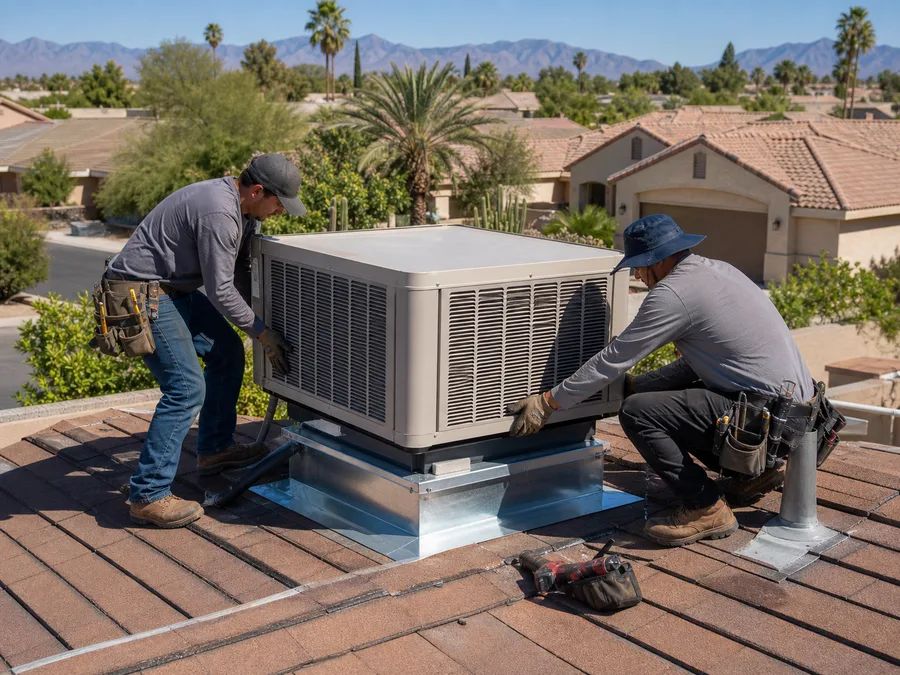
Replace an old unit or install a new evaporative cooler sized for your home and climate.
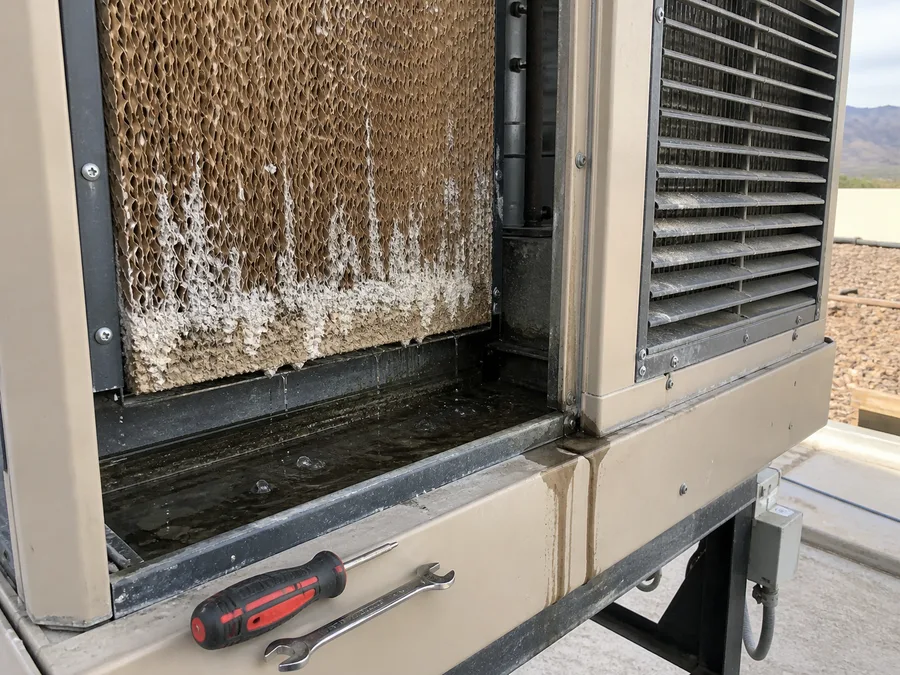
Clean, inspect, and tune up your cooler before heat, scale, or worn parts cause a breakdown.
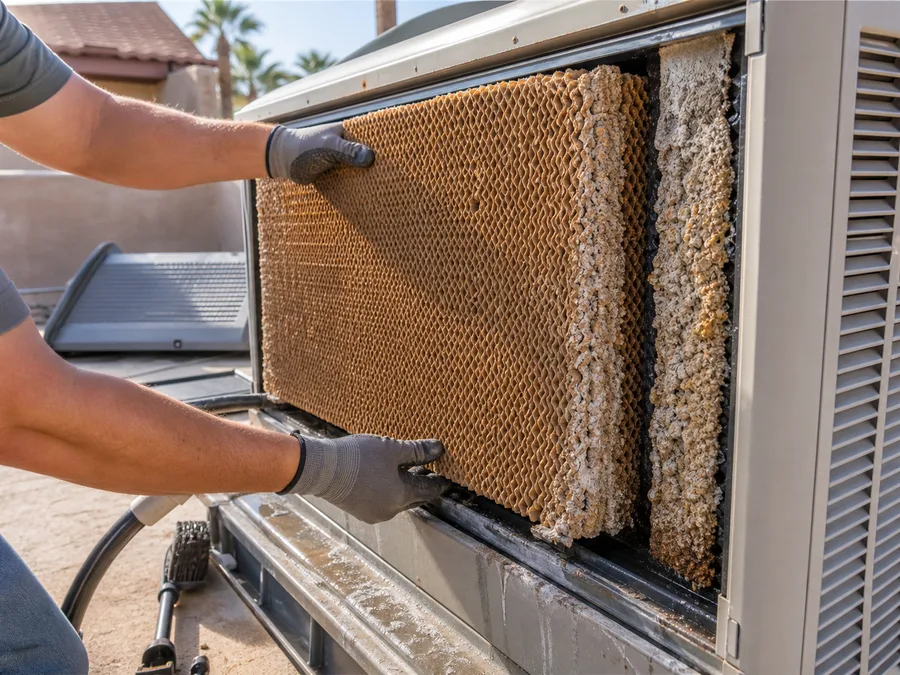
Replace worn or mineral-clogged pads so your cooler can move more air and cool better.
Start with the symptom closest to what you see or hear at your Denver home. Use the details below to describe when it happens, what the pads look like, and whether airflow or water has changed.
On 90°F summer afternoons in Denver, warm air often points to dry pads, weak pump flow, clogged distributor lines, or worn pad media.
If airflow drops at your Denver home, note whether one room or the whole house is affected. Clogged pads, belt trouble, a slowing motor, or duct restrictions are common causes.
For a leak in Denver, note where water appears and whether the cooler is roof-mounted or ground-level. The line, float valve, drain, pan, or overflow may be involved.
If the fan runs during Denver heat but the pads stay dry, check for pump trouble, a stuck float valve, clogged tubing, or blocked distributor lines.
Denver water is around 5 gpg, so white crust, clogged pads, blocked water lines, or heavy buildup in the reservoir can show up during heavy summer use.
Pads, pump, belt, float, and cleaning issues often point toward repair. In Denver, cabinet rust, repeat leaks, poor sizing, or major wear can make replacement worth comparing.
In Denver, water conditions, a 105-day cooling season, roof access, and local permit rules can change what the cooler needs and what should be included in an estimate.
The Denver water supply includes mountain snowmelt collected from the South Platte and Colorado River watersheds, generally lower in hardness than desert water but still capable of leaving seasonal buildup. As water evaporates, dissolved minerals can remain on pads, distributor lines, and the reservoir.
Homes in Highlands, Baker, Capitol Hill, Park Hill, Washington Park, Sloan's Lake and elsewhere in Denver County experience many of the same water, weather, roof-access, and seasonal cooling conditions.
Denver has dry summer afternoons and a shorter season than the desert Southwest. Spring startup and fall shutdown matter because freezes, hail, dust, and quick weather swings can all affect an evaporative cooler.
Denver lists evaporative cooling units under mechanical quick permits for single-family and duplex work. For a new unit, full replacement, rooftop work, or changed equipment location, ask whether the estimate includes the mechanical permit and Denver contractor licensing requirements.
Check the Denver ZIP examples below, then share the exact service address when you call or request an estimate.
These are common ZIP examples for Denver. Call with the exact service address if your ZIP is not shown.
Use the map to see Denver in relation to nearby communities and county lines.
Share your exact ZIP code to check service near the home.
Use $90 to $450 as a broad planning range for many common repairs, not as a local price list for Denver. Roof access, mineral scale, parts, urgency, and the age of the cooler can move the actual estimate.
| Job | Typical range |
|---|---|
| Common repair total | $90 - $450 |
| Seasonal tune-up | $80 - $200 |
| Pad replacement | $60 - $225 |
At a home in Denver, the same repair can price differently depending on roof or ground access, parts, water scale, urgency, and how long the cooler has been struggling.
Use the nearest listed area around Denver, choose the service you need, or open the guide that matches the symptom.
If you are outside city limits, choose the nearest listed area around Denver.
More Colorado service areas
Choose what the cooler at your Denver home needs. If you are not sure, start with the symptom guide that matches what you see or hear.
See common causes, safe checks, and when the problem needs repair.
Quick answers for homeowners in Denver.
Hot afternoons in Denver average around 90°F with about 30% humidity. Lower humidity allows more evaporation, so a cooler can work well when the pads stay wet, the pump moves enough water, and airflow remains strong.
A broad planning range for many common swamp cooler repairs is $90 to $450. This is not a local price list for Denver; roof access, parts, mineral scale, water-line issues, urgency, and the condition of the unit determine the actual estimate.
With water around 5 gpg and about 105 cooling days a year, visually inspect the pads before peak summer and again during heavy use. Check sooner if you see dry sections, white crust, musty odor, or weaker airflow, and follow the cooler and pad manufacturer for the maintenance schedule.
At around 5 grains per gallon (gpg), Denver water can leave white scale on pads, water lines, and the reservoir. Once that buildup blocks water flow, the cooler can still run but stop cooling well.