Most swamp cooler smells come from stagnant water, a dirty pan, and old pads that stay damp. A fishy or burning smell is different and means turn it off. Here is how to tell them apart and get rid of the smell.
The smell tells you whether it is cleaning or a repair.
A swamp cooler pushes outside air through wet pads, so anything growing in the water or pads ends up in the house. Water-related smells are fixed with cleaning and pads. Electrical smells need the power off and a technician.
Smell guide
Five swamp cooler smells and what causes them.
Musty or moldy
The most common smell. Stagnant water in the pan, algae, and old pads that stay damp grow mildew. Cleaning the pan and replacing worn pads usually fixes it.
Sour or swampy
Water that sits in the pan for days, a dirty reservoir, or a cooler that runs with the pump on but the fan off can turn the water sour.
Rotten eggs
A sulfur smell often comes from bacteria in stagnant water, or from sulfur compounds in some well water supplies. Draining, cleaning, and fresh pads are the first step.
Woody smell from new pads
New aspen pads can have a wood or hay smell for the first days of use. It should fade quickly. If it does not, check that water is flowing and the pads are not staying soaked with the fan off.
Fishy, burning, or hot plastic
This one is different. A fishy or hot-plastic smell can come from overheating motor windings or wiring insulation. Turn the cooler off at the breaker and call before running it again.
Step by step
How to get rid of a swamp cooler smell.
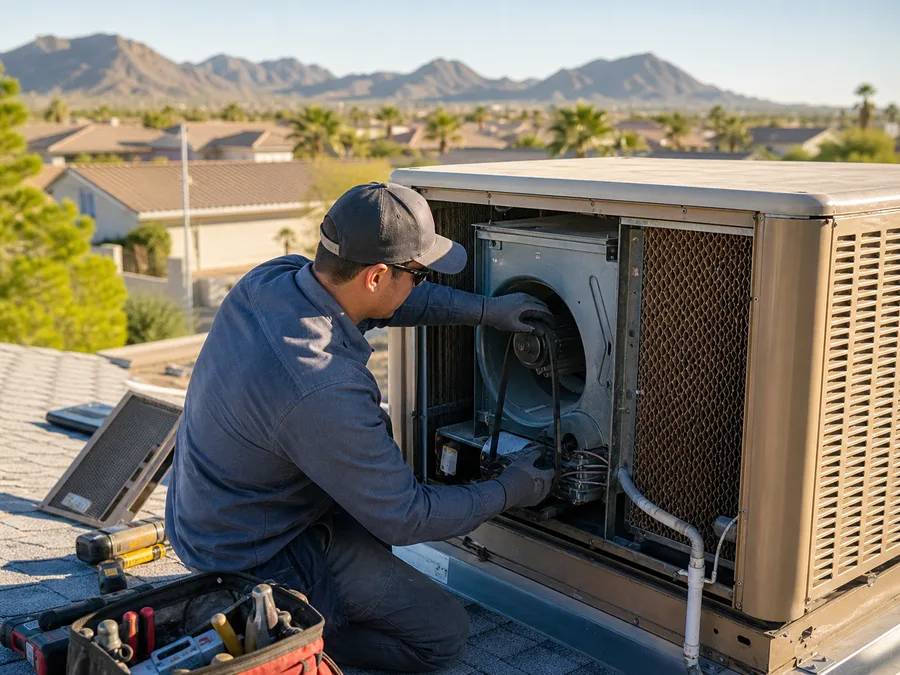
Cut power before opening a panel. If the cooler is on the roof, use a secured ladder and skip roof work in wind, heat, or wet weather.
01
Turn the cooler off and cut power at the breaker or unplug it. Close the water supply.
02
Drain the pan completely and scoop out sludge, algae, and loose scale. Scrub the pan and wipe the inside of the cabinet. A diluted white vinegar solution helps with film and light scale.
03
Rinse and refill with fresh water. Check that the float valve shuts off a little below the top of the overflow so the water is not stagnant and overfilled.
04
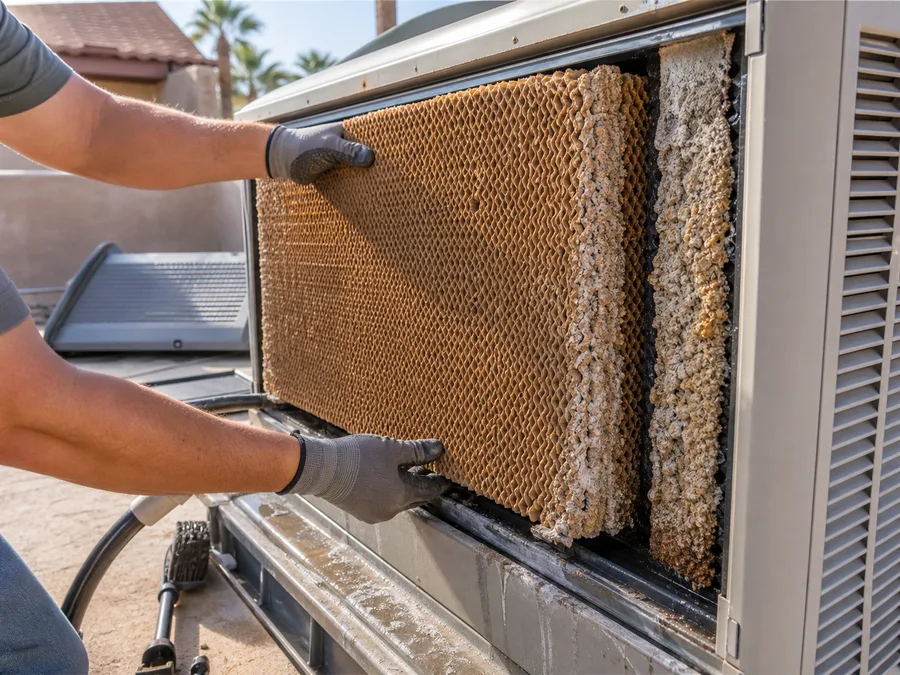
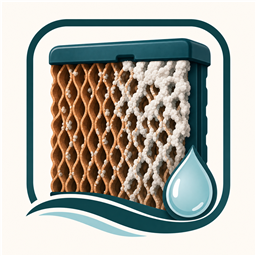
Replace pads that are crusted, sagging, slimy, or smell even after the pan is clean. Odor often lives in the pad media.
05
Clean the pump intake and flush the distributor so water moves evenly. Dry sections next to soaked sections encourage growth.
06
At the end of the day, run the fan with the pump off for 10 to 15 minutes so the pads dry. Pads that stay wet overnight are the main cause of musty smell.
07
If the cooler has a bleed-off or purge line, make sure it works. Replacing a little water continuously keeps minerals and odor from building up.
08
Use a deodorizer or cooler tablet made for evaporative coolers only as directed on the label. Avoid bleach unless the cooler manufacturer allows it, because it can damage pads and metal.
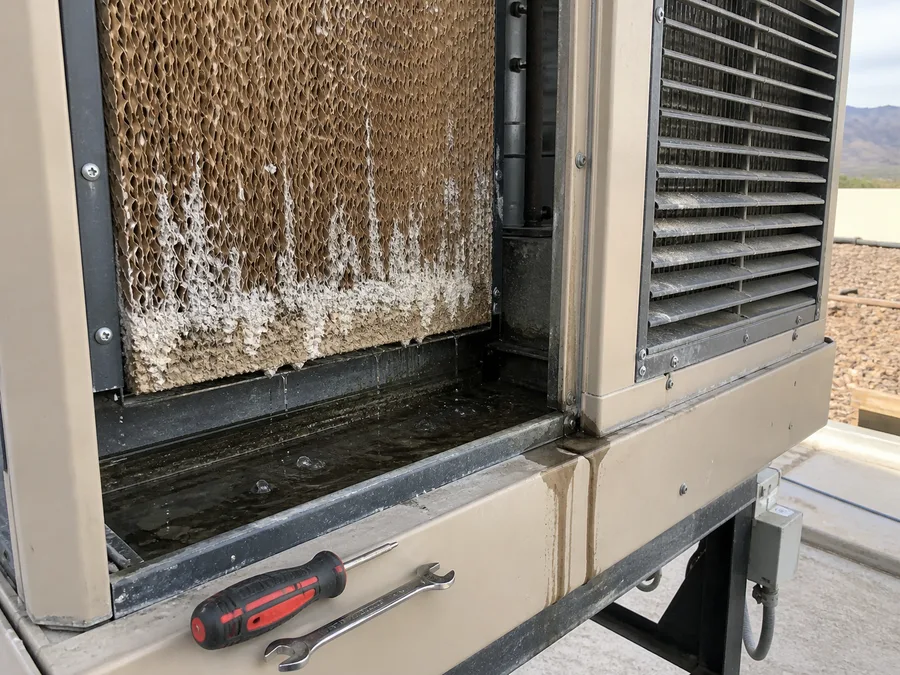
Odor usually lives in the pan and pads
Clean the pan and replace pads that still smell after cleaning. Drying the pads at the end of the day keeps mildew from coming back.
When to call
Call when the smell is electrical or keeps coming back.
A smell that returns after cleaning often means pads, a rusted pan, or water flow need attention. A fishy or burning smell needs a technician before the cooler runs again.
You smell fishy, burning, or hot plastic
The smell comes back within days after cleaning
The pan is rusted, leaking, or full of heavy scale
The cooler is on the roof and the pads need replacing
Water is leaking into the ceiling or walls
Call brief
What to mention when you call.
Your ZIP code and nearest city
What the smell is like: musty, sour, rotten eggs, fishy, or burning
When it happens: at startup, all day, or after the cooler sits off
When the pads were last replaced
Any leaks, rust, or white scale you can see
Where the cooler is mounted: roof, wall, window, or ground
Musty smell usually comes from stagnant water, algae in the pan, and old pads that stay damp. Clean the pan, replace worn pads, and dry the pads with the fan running and the pump off before shutting down.
Why does my swamp cooler smell like fish?
A fishy smell can come from overheating electrical parts, such as motor windings or wire insulation. Turn the cooler off at the breaker and have the motor and wiring checked before using it again.
How do I get rid of a swamp cooler smell?
Drain and clean the pan, replace odor-holding pads, clear the pump and distributor, keep the water level correct, and dry the pads at the end of each day. A deodorizer made for evaporative coolers can help between cleanings.
Do swamp cooler deodorizers work?
They can reduce odor between cleanings, but they do not fix a dirty pan, old pads, or stagnant water. Clean first, then use a product made for evaporative coolers as directed.
Is a smelly swamp cooler bad for my health?
Mold and bacteria growing in a dirty cooler can irritate allergies and breathing in some people. If anyone in the home is sensitive, clean the cooler, replace pads, and keep the cooler maintained through the season.
Fresh air should not smell like a swamp.
If cleaning does not fix it, or the smell is fishy or burning, call or request an estimate and describe the smell.