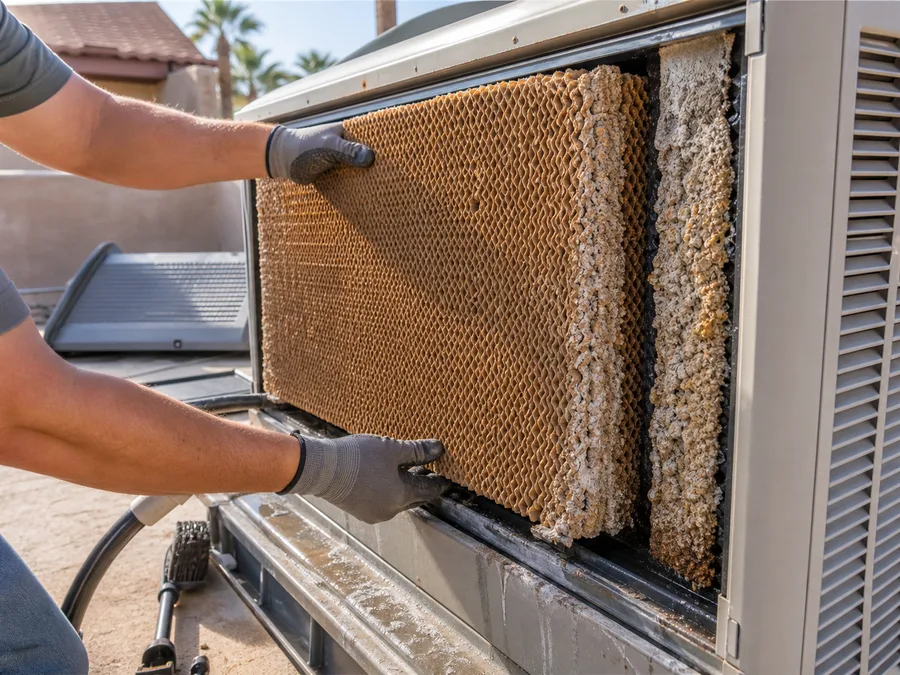
Light dust on intact, safely accessible pads may be cleanable. Follow these steps, and replace pads that are brittle, musty, sagging, or heavily crusted.
Cleaning helps only if the pad media is still in good shape.
Swamp cooler pads need to hold water and let air pass through. If dust is light, cleaning may help. If mineral scale, odor, or pad breakdown is heavy, replacement is usually the better next step.
Cleanable signs
When cleaning may be worth trying.
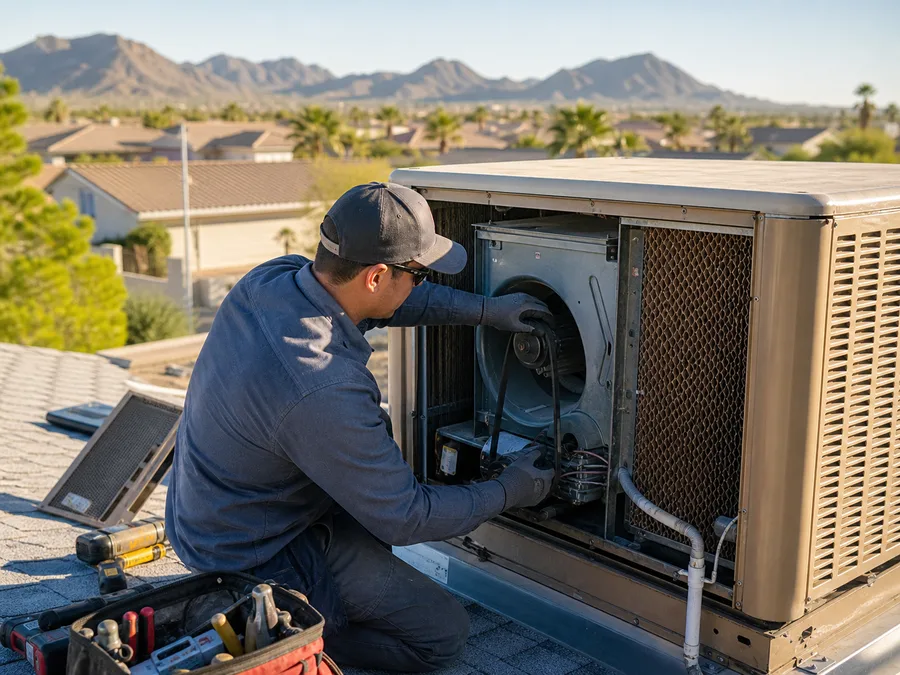
Only inspect or clean pads if access is safe. If the cooler is roof-mounted or hard to reach, call instead.
Light dust on newer pads
If pads are fairly new and only dusty, a basic rinse or cleaning may help them wet more evenly and reduce odor.
Minor mineral film
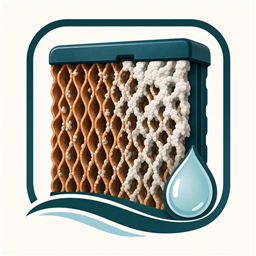
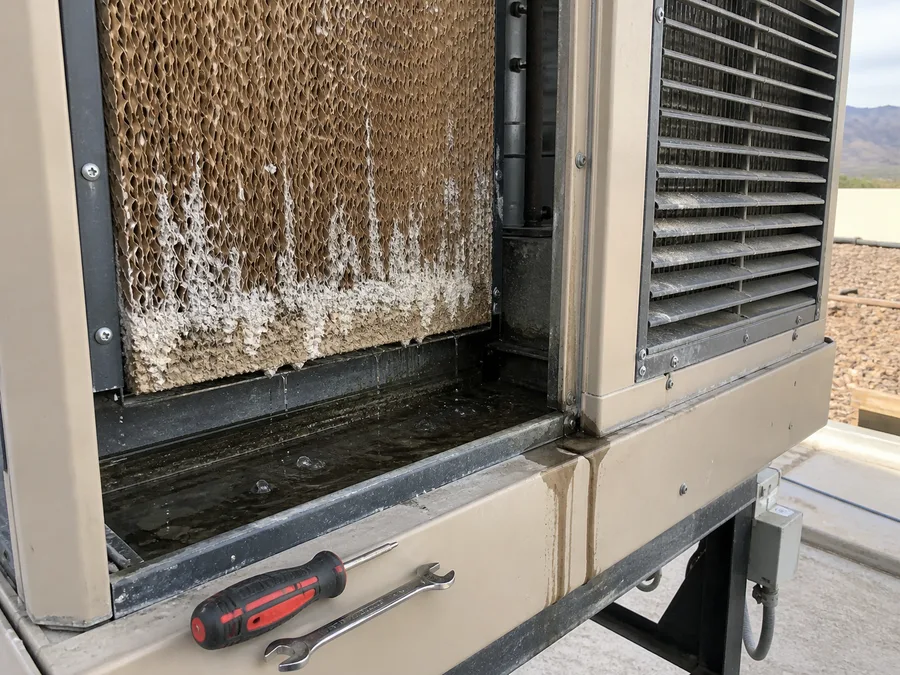
A thin white film may be manageable, but heavy white crust usually means water and airflow are already being blocked.
Uneven wetting
Sometimes the pad is not the only issue. Clogged distributor lines or weak water flow can make a clean pad stay dry in spots.
Cleaning has a limit
If pads are brittle, sagging, musty, or heavily crusted, replacement usually makes more sense than trying to rinse them again.
Replacement signs
When cleaning probably will not solve it.
If the pad material itself is worn out, cleaning cannot make it hold water or move air like a fresh pad.
Pads are brittle, sagging, or falling apart
Old pad media can lose shape and stop holding water correctly. Cleaning will not restore a pad that is breaking down.
Heavy white crust keeps coming back
Hard-water scale can clog pad fibers and water paths. If airflow and cooling are already weak, replacement may be more useful than cleaning.
Musty smell or dirty water returns quickly
Odor can come from old pads, standing water, a dirty reservoir, or buildup inside the cooler. Mention smell and pad age when requesting help.
Safe cleaning steps
How to clean intact, accessible swamp cooler pads.
Do not climb onto a roof, reach into a running cooler, or handle electrical parts. If the unit is roof-mounted or difficult to isolate from power, request service instead.
01
Turn off the cooler and water supply, and follow the unit manual before removing any accessible panel or pad. Do not continue if power cannot be isolated safely.
02
Remove pads only from a safely accessible ground-level, wall, or window unit. Note the pad direction and frame position before taking anything out.
03
Use a soft brush or vacuum for loose dry dust, then rinse intact pads gently with clean water. High pressure can damage the pad media.
04
Do not use bleach, acid, or a descaling chemical unless the pad manufacturer specifically allows it.
05
Clear loose debris from the accessible pad frame and reservoir without touching wiring, the motor, or other electrical parts.
06
Reinstall the pads in the correct direction and check for even wetting. If sections stay dry, call about the pump, float valve, or distributor lines.
Decision guide
Cleaning, replacement, maintenance, or repair?
The best next step depends on pad age, mineral scale, water flow, and whether the cooler is already blowing warm air.
Try cleaning when: Pads are newer and only lightly dusty A light rinse or routine cleaning may help when the pad media is still intact and water can still move through it.
Ask about replacement when: Pads are crusted, brittle, musty, or sagging Replacement usually makes more sense when pads are physically worn, smell bad, or have mineral buildup that blocks airflow.
Ask about maintenance when: Clean pads still do not get wet evenly The issue may be pump strength, water level, float valve, clogged lines, or distributor problems instead of the pad surface alone.
Ask about repair when: Warm air, leaks, or pump noise are already happening If the cooler is already failing to cool, cleaning pads may not address the main problem.
When to call
Call when pads are worn, crusted, or still not cooling well.
Pad problems are often tied to water flow, pump performance, hard-water scale, and dirty reservoirs. A quick call can help you ask for the right service.
Pads are brittle, sagging, musty, or falling apart
White mineral crust blocks large parts of the pad surface
Airflow is weak even after pads are rinsed or replaced
Pads stay dry because water is not reaching them evenly
The cooler smells bad, leaks, or blows warm air during peak heat
Call brief
What to mention when asking about pads.
These details make it easier to ask for cleaning, pad replacement, maintenance, or repair help.
Your ZIP code and nearest city
Whether the pads are dirty, crusty, musty, dry, brittle, or sagging
When the pads were last replaced
Whether water reaches all pads evenly
Whether the cooler blows warm air, has weak airflow, leaks, or smells musty
Whether the cooler is roof-mounted, side-mounted, window-mounted, or ground-level
Local water conditions
Hard water can make pad cleaning less effective.
In dry-climate cities with hard water, white crust can clog pad media and return quickly. That is when replacement and water-flow checks matter more than surface cleaning alone.
Phoenix, AZ14 gpg / 220 cooling days
In Phoenix, hard water can leave mineral scale on pads faster. Check whether the pad is intact and water reaches it evenly.
White crust can return after cleaning
If hard-water scale is heavy, pads may clog again quickly unless water flow, the reservoir, and pad condition are checked together.
Sometimes. Newer pads with light dust or minor buildup may respond to basic cleaning. Pads that are brittle, sagging, musty, or heavily crusted usually need replacement instead.
How do I know if swamp cooler pads should be replaced?
Replacement is worth asking about if pads are falling apart, smell musty, have heavy white mineral scale, stay dry, or no longer cool well even when water is flowing.
Can hard water ruin swamp cooler pads?
Hard water can leave mineral scale on pads and water lines. Over time that buildup can block water and airflow, making pad checks and replacement more important.
Why are my swamp cooler pads dry after cleaning?
Dry pads after cleaning may point to pump trouble, low water level, a float valve problem, clogged distributor lines, or a disconnected water tube.
Should I clean pads myself or request service?
Only clean what you can reach safely. If the cooler is on a roof, has electrical concerns, leaks, pump noise, or pads that are badly worn, request service help instead.
Do not let dirty pads turn into weak cooling.
If pads are crusted, musty, brittle, or still dry after cleaning, call or request an estimate and describe what you see.