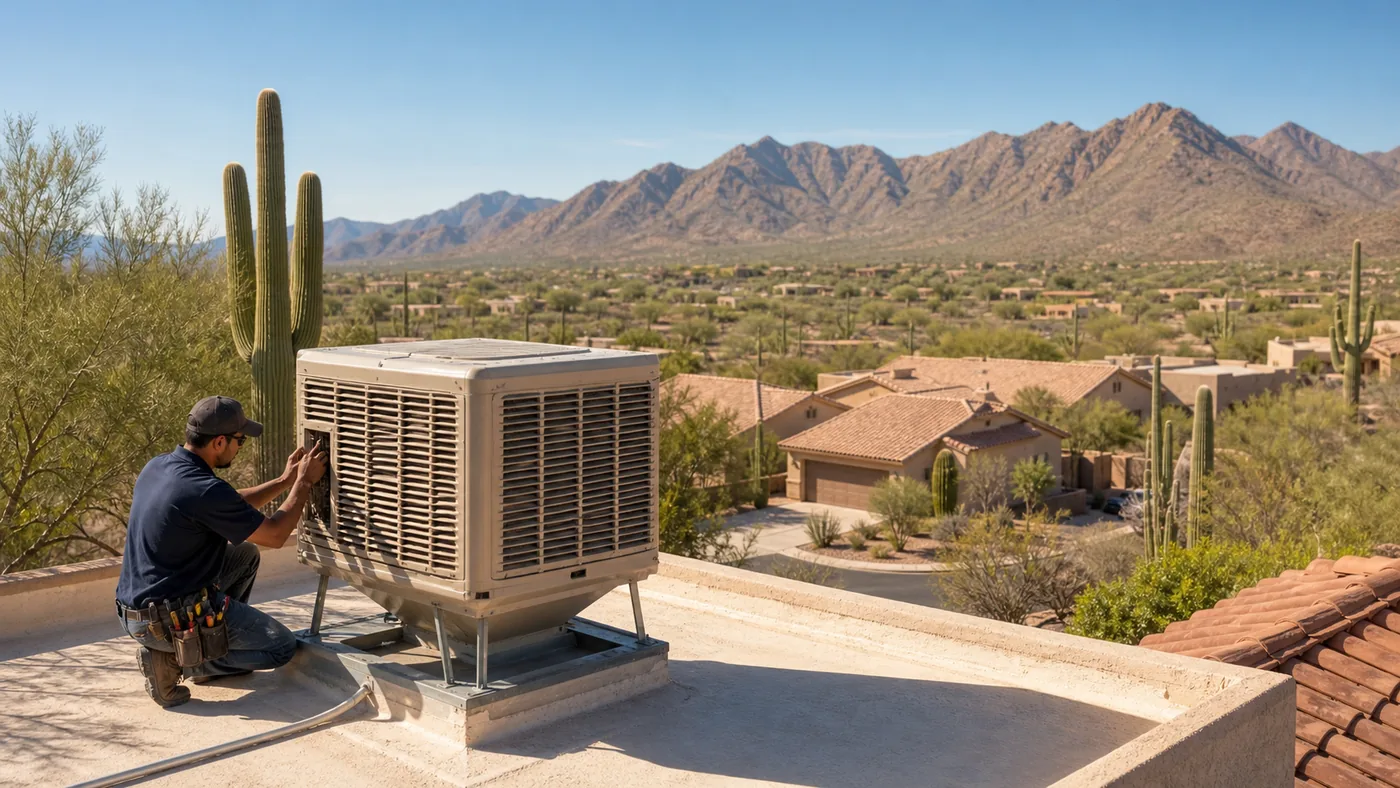
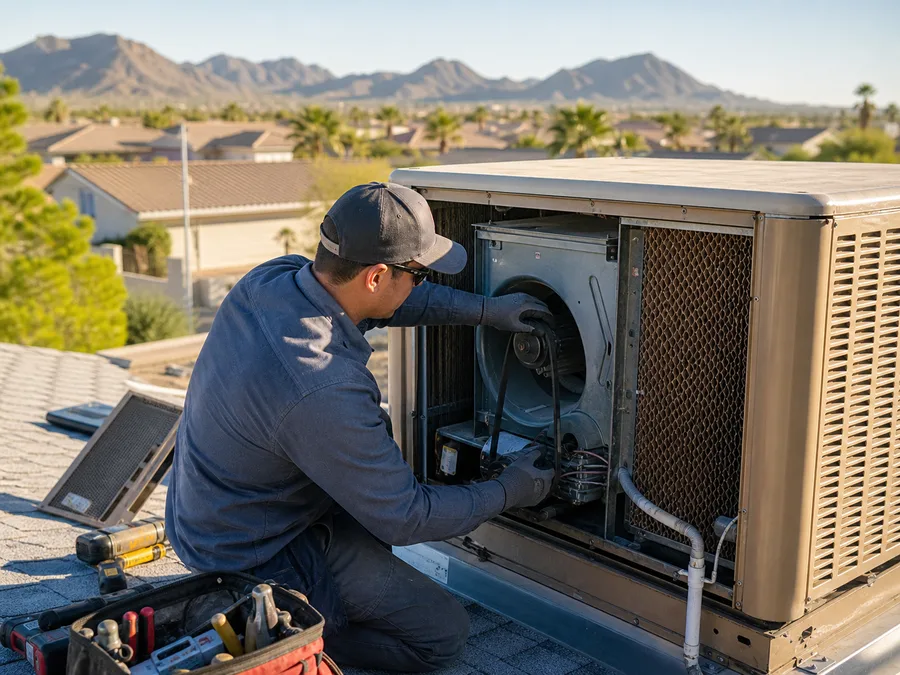
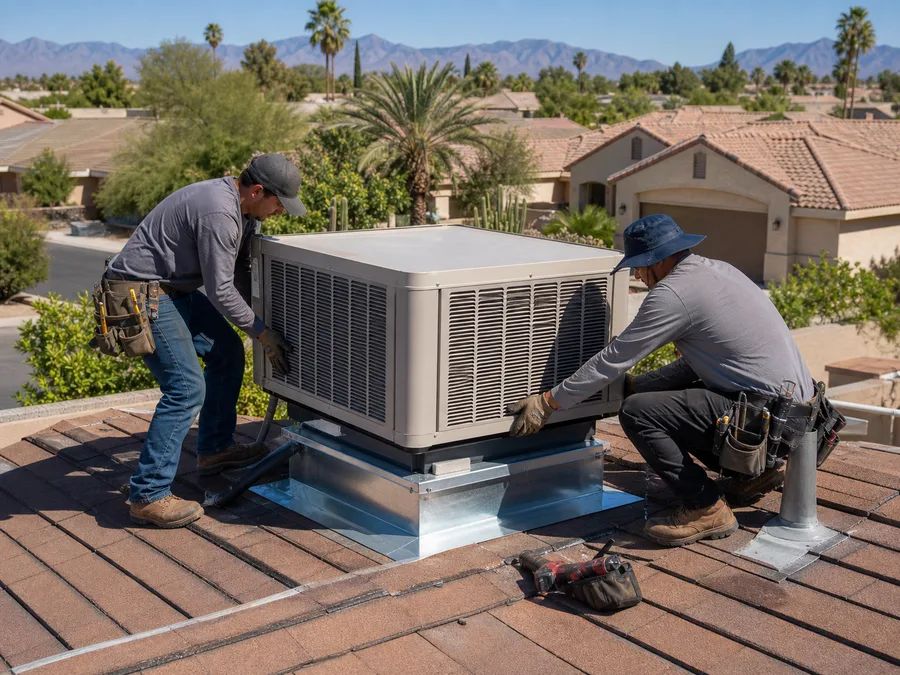
A swamp cooler can be a smart fit in hot, dry air. Central air is stronger when humidity, closed-window comfort, or tighter temperature control matter more.
Swamp coolers tend to fit hot, dry climates and existing evaporative setups. Central air handles humidity, closed-window cooling, and tighter temperature control more consistently.
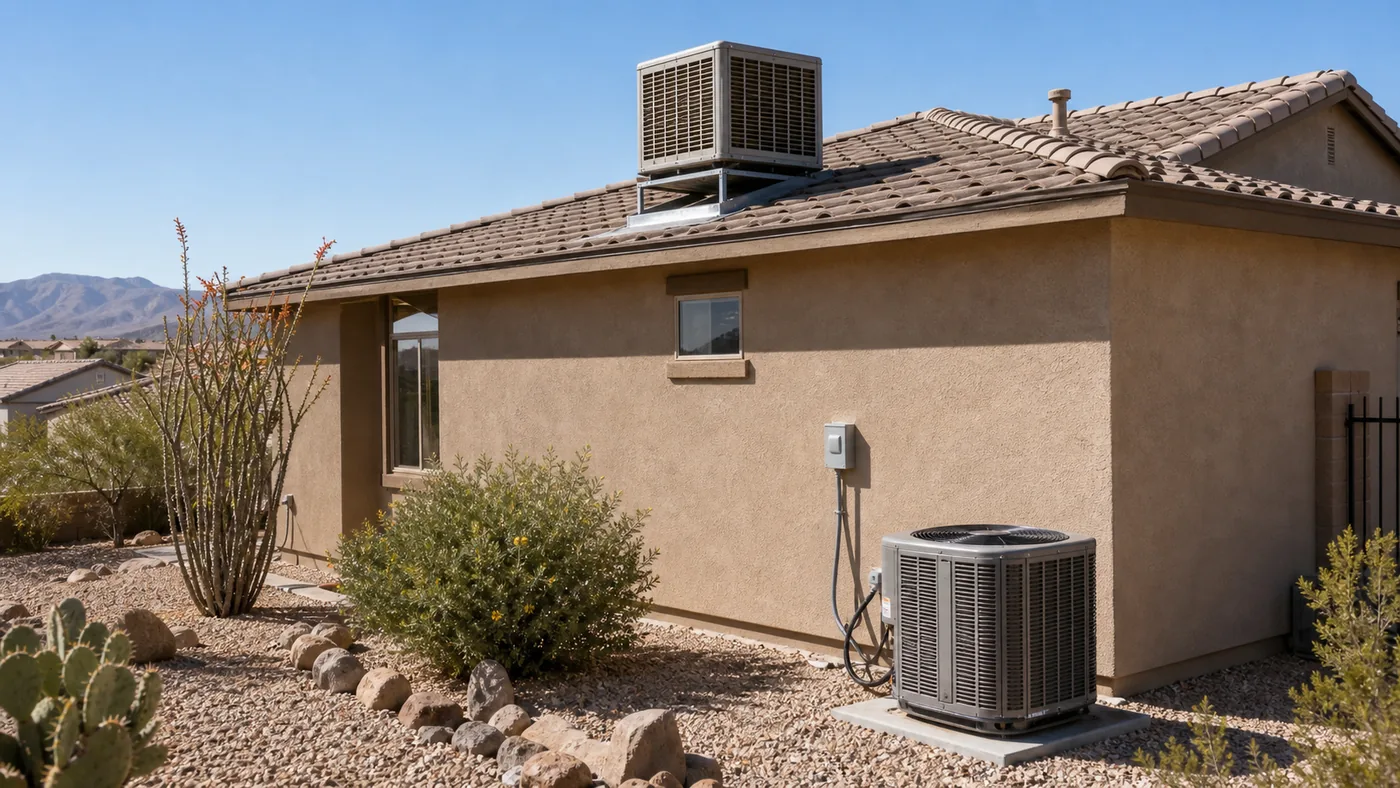
Swamp coolers use water and airflow. Central air uses refrigeration.
A swamp cooler pulls outside air through wet pads, so climate and water quality matter a lot. Central air cools indoor air through a refrigerant system, so it performs more consistently across humid weather but generally costs more to install and uses more electricity.
Side-by-side
Swamp cooler vs central air comparison.
Use this table to decide what kind of estimate or service conversation makes sense for the home.
Factor
Swamp cooler
Central air
Best climate fit
Hot, dry air with lower humidity
Works in dry, humid, and mixed climates
How it cools
Moves outdoor air through wet pads
Uses refrigerant and a closed indoor air loop
Humidity effect
Adds moisture, which can help in dry air but feel weaker in humid stretches
Removes moisture and controls indoor humidity better
Typical electricity use
Generally lower because the unit mainly runs a fan and pump
Generally higher because it runs a compressor system
Maintenance focus
Pads, pump, water lines, float valve, mineral scale, winterizing
Less effective during humid monsoon weather or when pads/water flow fail
Higher install and operating cost, more complex equipment
These systems solve comfort differently
A swamp cooler depends on dry outside air, wet pads, and airflow; central air depends on refrigeration and handles humid days more consistently.
When swamp coolers make sense
A swamp cooler is strongest when the air is dry and the unit is maintained.
If the home already has evaporative cooling, the best question is often whether the old unit needs repair, maintenance, pads, or a same-location replacement.
Dry heat is the main problem
In desert and high-desert areas, lower humidity can make evaporative cooling useful when pads stay wet and airflow is strong.
You want lower operating cost
A swamp cooler usually uses a fan and pump instead of a compressor, so it can be cheaper to run in the right climate.
The home already has the setup
If the roof opening, ducts, water line, and electrical are already in place, a same-location replacement can be simpler than changing systems.
When central air may be a better fit
Central air handles humidity and tighter temperature control more consistently.
Central air may be worth discussing when the home still feels uncomfortable after the cooler has good water flow, clean pads, and strong airflow.
Humidity makes cooling feel inconsistent
When monsoon humidity rises, evaporative cooling may feel weaker. Central air handles humid periods better because it removes moisture.
You need tighter temperature control
Central air is usually better when the home needs more consistent cooling, closed windows, or room-by-room comfort expectations.
The old cooler is no longer practical
Heavy rust, repeated leaks, roof issues, poor airflow, or repeated seasonal failures can push the decision beyond another cooler repair.
Decision point
Check the obvious cooler issues before comparing systems.
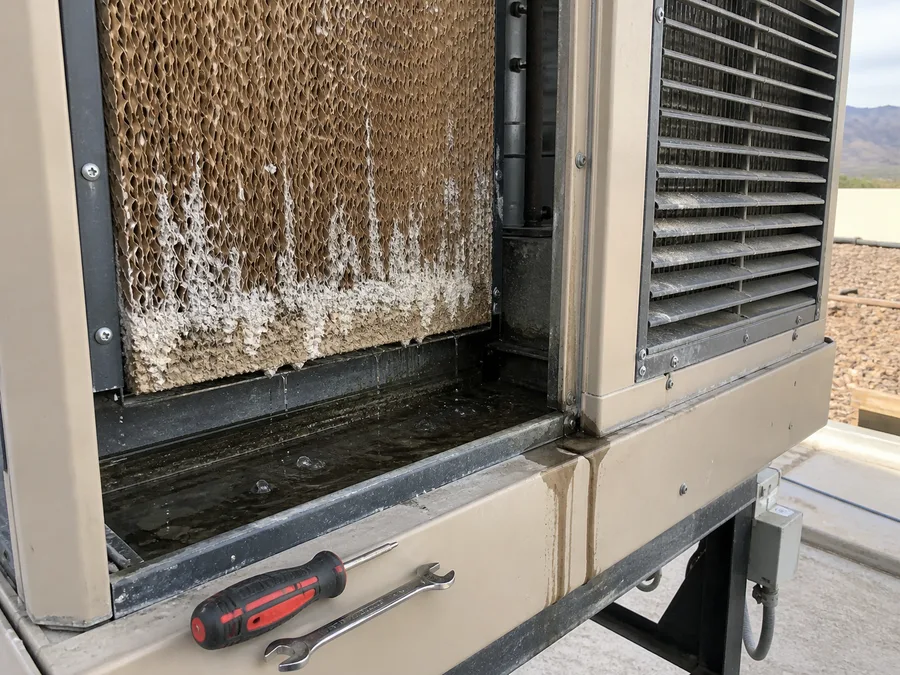
Warm air or weak cooling may come from dry pads, pump trouble, mineral scale, worn pads, a loose belt, or poor airflow. Those are different from deciding to switch the whole home to central air.
Ask about repair if the fan runs but pads are dry.
Ask about maintenance if hard-water scale is visible.
Ask about installation if the unit is rusted, leaking, undersized, or repeatedly failing.
Before you call
Details that make the estimate conversation clearer.
Compare what the current cooler is doing with how the home feels during dry heat, humid stretches, and peak afternoon temperatures.
01
Your ZIP code and nearest city
02
Whether the home already has a roof, side, window, or ducted swamp cooler
03
Whether the issue is weak cooling, humidity, leaks, mineral scale, or repeat repairs
04
Whether you are comparing another swamp cooler replacement with switching systems
05
Whether the old cooler is roof-mounted, rusted, undersized, noisy, or hard to service
06
Whether comfort drops mainly during humid monsoon stretches or during all hot afternoons
Local climate examples
Dry-climate cities are not all the same.
Summer humidity, cooling season length, hard water, roof access, and monsoon weather can change whether a swamp cooler feels like a good fit.
Phoenix, AZ106°F / 21% humidity
In Phoenix, lower summer humidity can make evaporative cooling a stronger fit when the unit is maintained. Compare comfort during humid stretches with peak afternoon heat.
In Las Vegas, lower summer humidity can make evaporative cooling a stronger fit when the unit is maintained. Compare comfort during humid stretches with peak afternoon heat.
In Albuquerque, lower summer humidity can make evaporative cooling a stronger fit when the unit is maintained. Compare comfort during humid stretches with peak afternoon heat.
In Denver, humidity swings can affect how strong a swamp cooler feels during parts of the season. Compare comfort during humid stretches with peak afternoon heat.
In Salt Lake City, humidity swings can affect how strong a swamp cooler feels during parts of the season. Compare comfort during humid stretches with peak afternoon heat.
In Tucson, lower summer humidity can make evaporative cooling a stronger fit when the unit is maintained. Compare comfort during humid stretches with peak afternoon heat.
Climate is part of the comfort decision
A swamp cooler can feel very different in dry afternoon heat than it does during humid stretches, monsoon weather, or long periods without maintenance.
A swamp cooler can be a better fit in hot, dry areas when the home already uses evaporative cooling and the system is maintained. Central air is usually better for humid weather, tighter temperature control, and homes that need closed-window cooling.
Why does a swamp cooler work better in dry climates?
Evaporative cooling depends on water evaporating into dry air. When outdoor humidity is low, that process works better. When humidity rises, the air cannot absorb as much moisture, so the cooler may feel weaker.
Is central air more expensive than a swamp cooler?
Central air generally costs more to install and uses more electricity because it runs a compressor-based refrigeration system. Actual operating cost depends on local electricity and water rates, weather, equipment efficiency, and run time.
Should I replace my swamp cooler with another swamp cooler or switch to central air?
If the home is in a dry area and already has a working evaporative setup, another swamp cooler may make sense. If the cooler is repeatedly failing, humidity is a constant comfort problem, or the home needs stronger temperature control, ask about replacement options.
Can a swamp cooler and central air be used in the same home?
Some homes use both, but they are different systems and should be evaluated carefully. The right setup depends on ductwork, controls, ventilation, humidity, and the home layout.
Not sure whether to repair, replace, or compare systems?
Call or request an estimate and share what the cooler is doing, where it is installed, and how the home feels during dry heat or humid stretches.